
Dynamic PRP+ is high-dose, multi-spin, ultrasound-guided platelet-rich plasma, concentrating platelets at 12 to 20 times baseline (over 10 billion platelets), not the 2 to 3x most clinics produce. Every procedure is co-delivered with Exosome-Containing Fibrin-Rich Plasma (FRP) to keep growth factors active at the injection site, and is performed exclusively by Aneesh Garg, DO, CAQ under real-time ultrasound. That is why patients choose it over a standard injection: physician-performed, imaging-guided, at a dose the published evidence is actually built on.
| Factor | Dynamic PRP+ | Standard PRP |
|---|---|---|
| Platelet concentration | 12 to 20x baseline (~10 billion) | 2 to 3x baseline |
| Co-delivery | + Exosome-Containing Fibrin-Rich Plasma (FRP) | PRP alone |
| Guidance | Live ultrasound, every injection | Often by feel or landmark |
| Performed by | Aneesh Garg, DO, CAQ | Varies / technician |
Platelet-rich plasma is made from your own blood. A sample is drawn, then spun in a centrifuge that separates the blood into layers and concentrates the platelets. Those platelets carry your body’s growth factors, the signaling proteins that direct tissue repair. When the concentrated platelets are injected into an injured tendon, ligament, or joint, they release those growth factors at the site and recruit the reparative cells that rebuild tissue. Nothing donor-derived is introduced. PRP amplifies a repair process your body already runs.
The dose sets the ceiling. A treatment is only as strong as the number of platelets it actually delivers, and that is where PRP quietly divides into two different treatments. A single-spin bedside kit typically concentrates platelets 2 to 3 times baseline. Dynamic PRP+, the protocol Aneesh Garg, DO, CAQ performs at Dynamic Athlete in Boulder, uses a larger draw and multi-spin processing to reach 12 to 20 times baseline, over 10 billion platelets, the range the published evidence is built on. Same three letters, very different biology in the syringe.
Dynamic PRP+ concentrates platelets to over 10 billion, 12 to 20 times whole-blood baseline, through a larger blood draw and multi-spin processing, then co-delivers them with Fibrin-Rich Plasma as a scaffold inside the tissue. A single-spin bedside kit typically reaches only 2 to 3 times baseline. Because PRP is not a standardized product, the platelet dose is the treatment: the number of platelets actually delivered is what separates the preparations the evidence favors from the ones it does not. Every Dynamic PRP+ injection is prepared and performed by Aneesh Garg, DO, CAQ, under live ultrasound.
Dynamic PRP+ treats knee osteoarthritis, rotator cuff tears, shoulder impingement, hip labral pathology, plantar fasciitis, Achilles tendinopathy, tennis elbow, golfer’s elbow, patellar tendinitis, and chronic ligament injuries. Each treatment plan is matched to the specific tissue, imaging findings, and your performance goals. For severe or degenerative cases, Dynamic PRP+ pairs with Dynamic Stem Cell+ (BMA or MFAT) for deeper biologic support.
Knee osteoarthritis is the most common reason patients ask about PRP, and Dynamic Athlete has a dedicated guide to PRP for knee osteoarthritis in Boulder, CO covering the Dynamic PRP+ approach for the knee.
PRP is not a standardized product, and outcomes are highly operator‑dependent. Variations in processing methods, platelet concentration, leukocyte content, and injection technique can meaningfully change how tissue responds.
Different tissues tolerate inflammation differently. Selecting an inappropriate PRP formulation or injecting without imaging guidance can limit effectiveness or prolong recovery.
Dynamic PRP+ is high dose, multi-spin platelet-rich plasma, concentrating platelets at 12 to 20 times baseline, with over 10 billion platelets extrapolated from research, not the 2 to 3x most clinics produce. Processing methods, platelet concentration targets, and biologic matrix selection are matched to the tissue and pathology under treatment. Every Dynamic PRP+ procedure is performed by Dr. Garg under real-time ultrasound guidance.
Every Dynamic PRP+ procedure at Dynamic Athlete is combined with Fibrin-Rich Plasma (FRP), a fibrin matrix derived from the same blood draw. FRP creates a biological scaffold at the injection site that keeps growth factors localized and active longer than standard PRP alone. Dr. Garg includes FRP in every Dynamic PRP+ procedure as standard, not as an upgrade.
When clinically appropriate, we precede Dynamic PRP+ with Shockwave and EMTT to prime tissue vascularity and cellular responsiveness, improving how the tissue receives and responds to the biologic injection. All procedures are performed personally by Dr. Aneesh Garg, DO, CAQ under real-time ultrasound guidance. We also offer Stem Cell Therapy (MFAT/BMA) paired with PRP+FRP for patients with more advanced tissue pathology.
When clinically appropriate, shockwave therapy and EMTT are used to prepare tissue prior to PRP injection. These modalities can improve local blood flow, cellular responsiveness, and mechanical signaling, which may enhance how PRP is received by the tissue.
Dynamic PRP+ in Boulder treats a wide range of musculoskeletal conditions. The most common are:
Dr. Garg evaluates each case individually. The tissue type, degree of pathology, and patient activity goals determine the optimal PRP formulation, platelet concentration target, and whether shockwave therapy is used to prepare the tissue beforehand.
PRP may be considered for chronic tendon irritation, ligament injury, early joint degeneration, cartilage stress, and overuse-related musculoskeletal pain.
Dynamic PRP+ therapy may be appropriate for individuals who remain active despite persistent pain, wish to avoid surgery, or have not responded to conventional treatments such as physical therapy or medications.
All PRP procedures at Dynamic Athlete are personally performed by Aneesh Garg, DO, CAQ, a double board‑certified regenerative medicine physician with advanced training in musculoskeletal diagnosis and ultrasound‑guided procedures. PRP injections are not delegated to assistants or technicians.
Physician‑performed care allows for accurate diagnosis, precise biologic placement, and appropriate adjustment of treatment strategy based on tissue response.
Dynamic PRP+ therapy at Dynamic Athlete uses autologous biologic material derived from the patient’s own blood and follows FDA‑aligned regenerative medicine standards, including minimal manipulation and same‑day use within licensed medical practice. No donor tissue, culture expansion, or non‑compliant biologic products are used.
PRP does not help every problem, and the honest reading of the research is specific. The strongest evidence supports PRP for chronic tendon conditions such as tennis elbow and other tendinopathies, where randomized trials have shown durable improvement. For knee osteoarthritis, multiple randomized trials and meta-analyses report that PRP can reduce pain and improve function, often outperforming hyaluronic acid injections in mild to moderate disease. Against a cortisone shot, cortisone tends to work faster in the short term while PRP is more durable over the following months for the right conditions.
One theme runs through the literature: preparation and platelet dose change the result. Under-concentrated, non-standardized PRP is a common reason studies show weak or mixed outcomes. That is the exact variable Dynamic PRP+ is built around: a measured high dose, placed under live ultrasound, by a physician. It is also why an accurate diagnosis comes first. PRP helps the right tissue in the right patient, and it is not the answer for end-stage joint destruction. See how this applies to the knee in our overview of the knee osteoarthritis condition, or how PRP compares with a steroid shot in PRP vs cortisone.
Patients often choose Dynamic Athlete for PRP therapy because care is structured around physician oversight, biologic precision, and procedural accountability rather than standardized injections.
This approach is suited for patients who value clinical judgment and durable outcomes.
Insurance does not cover regenerative medicine. We hear that hesitation in nearly every consult. Here is how active adults end up choosing Dynamic PRP+ anyway.
A meniscectomy or partial knee replacement runs 6 to 12 months from surgery to full return-to-activity, with cartilage loss accelerated long term. Dynamic PRP+ patients are typically back to daily activity within days and back to sport within weeks. The decision is not regenerative versus surgery on cost alone. It is the cost of months not lost, cartilage preserved, and a body that still trains in five years.
For patients who want to spread the cost, Dynamic Athlete offers financing through Cherry with 0% APR plans available for qualified applicants. Apply in under two minutes; decision is instant; the consultation moves forward the same day.
Dynamic Athlete Sports Medicine & Regenerative Orthopaedics
1790 30th St, Suite 270, Boulder, CO 80301
(303) 997-1733
Monday to Friday, 8:00 AM to 4:30 PM
Every Dynamic PRP+ procedure is performed by Aneesh Garg, DO, CAQ, in this office, under live ultrasound guidance.
Cost. Recovery timelines. PRP vs cortisone vs surgery. Conditions that respond best. Why Dr. Garg uses Fibrin-Rich Plasma when most clinics don’t. Every question we hear in consult, answered in physician voice on one page.
PRP therapy uses your own blood to accelerate repair. A small sample is drawn and spun in a centrifuge, which separates and concentrates the platelets. Platelets carry growth factors, the proteins that signal your body to repair tissue. The concentrated platelets are then injected into the injured tendon, ligament, or joint, where they release those growth factors and recruit reparative cells. Nothing donor-derived is used. At Dynamic Athlete, every injection is placed under live ultrasound by Aneesh Garg, DO, CAQ, so the platelets reach the exact target rather than the general area of pain. The result depends heavily on how many platelets are actually delivered, which is why dose and preparation matter as much as the injection itself.
The evidence is real but specific. PRP has the strongest support for chronic tendon conditions such as tennis elbow, and multiple randomized trials show it can reduce pain and improve function in mild to moderate knee osteoarthritis, often outperforming hyaluronic acid. It is not a fit for end-stage joint destruction, and low-dose, non-standardized PRP is a common reason some studies show weak results. That is why Dynamic PRP+ concentrates platelets 12 to 20 times baseline, over 10 billion, and places every injection under live ultrasound by a physician. Outcomes vary by patient, tissue, and diagnosis, which is why every plan starts with finding the true source of the problem rather than injecting everyone the same way.
Standard PRP is usually a single spin that concentrates platelets 2 to 3 times baseline, often processed by a technician and injected by feel. High-dose PRP delivers far more of the reparative cells. Dynamic PRP+ uses a larger blood draw and multi-spin processing to reach 12 to 20 times baseline, over 10 billion platelets, the range the published evidence is built on, and pairs it with Exosome-Containing Fibrin-Rich Plasma to keep growth factors active at the site. Every Dynamic PRP+ injection is performed personally by Aneesh Garg, DO, CAQ, under live ultrasound. Two injections can share the name PRP and still be very different treatments. The dose, the preparation, the imaging, and the physician are what separate them.
PRP is not covered by insurance, and the price varies with the condition, the number of sites treated, and whether other modalities are combined. The more useful question is what a given price actually buys: a measured high dose or a 2 to 3 times bedside prep, a physician or a technician, live ultrasound or a blind injection. Those choices decide whether the treatment reaches the tissue at all. Dynamic Athlete offers financing through Cherry, with plans available for qualified applicants. For a full breakdown of what drives the cost and how to compare value, see our guide to PRP cost in Boulder, CO.
A visit begins with a diagnostic evaluation and ultrasound to confirm the true source of the problem. On treatment day, blood is drawn and processed while you wait, then the prepared platelets are injected under live ultrasound guidance so the physician can watch the needle reach the target. The injection itself takes minutes. Mild soreness at the site for a few days is normal and is part of the repair response, so anti-inflammatory medication is generally avoided during that window. Most active adults return to daily activity within days and to sport within weeks, depending on the tissue treated. Some conditions respond best to a short series rather than a single injection, which the physician determines from your response.
Dynamic Athlete Sports Medicine and Regenerative Orthopaedics in Boulder provides high-dose, physician-performed PRP under live ultrasound. Aneesh Garg, DO, CAQ, “The Regen Doc,” personally performs the diagnostic evaluation and every injection, and can escalate to bone-marrow or adipose-derived cellular therapy when PRP alone is not the right tool. The clinic serves Boulder, Louisville, Lafayette, Erie, Broomfield, and Longmont. To compare providers and see how to verify a clinic’s protocol, see our guides on PRP injections near me and how to choose the best place for PRP in Boulder.
“I was told I needed knee replacement. Dr. Garg found the real problem at my SI joint. Now I’m pain-free, climbing, and ready for ski season.”
“I saw too many people my age with negative results after rotator cuff surgery. PRP was a complete success. I will not be needing surgery.”
“Ten difficult years of chronic ankle and knee conditions. PRP and shockwave were life-changing. Finally healing up completely.”
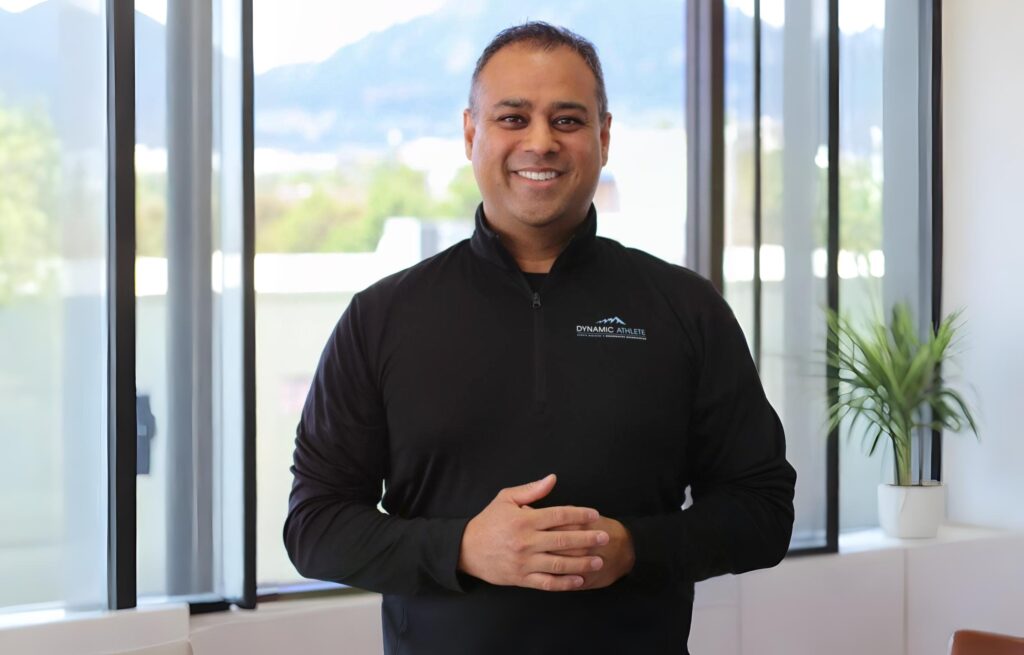
All Dynamic PRP+ and Dynamic Stem Cell+ procedures are performed exclusively by Dr. Garg. Dynamic Shockwave+, Dynamic Mind+, and Dynamic Core+ are performed by Dr. Garg and his clinical team.
Aneesh Garg, DO, CAQ. Founder of Dynamic Athlete Sports Medicine and Regenerative Orthopaedics. Yale residency trained. Andrews Sports Medicine fellowship trained. Double board-certified Sports Medicine and Internal Medicine. Team Physician USA Hockey and U.S. Soccer. Founder and Medical Director of ASTI (American Shockwave Training Institute).
Teaching faculty RMTI and Rocky Vista University. Host of The Regen Doc podcast. Dr. Garg developed the Dynamic PRP+, Dynamic Stem Cell+, Dynamic Shockwave+, Dynamic Mind+, and Dynamic Core+ protocols used at this practice.
Yale residency trained. Andrews Sports Medicine fellowship trained. Double board-certified Sports Medicine and Internal Medicine.
Yale-New Haven Hospital residency
Fellowship-trained at the American Sports Medicine Institute (ASMI) / Andrews Sports Medicine
Team Physician for USA Hockey and U.S. Soccer
Medical Director of the American Shockwave Training Institute (ASTI), training clinicians nationwide in ESWT, RPW, and EMTT
Known for physician-performed, ultrasound-guided PRP, BMA/MFAT, and shockwave-primed biologic injections
The Regen Doc breaks down real patient cases, protocol design, and what actually works vs. what the industry sells. New episodes on Apple Podcasts, Spotify, and wherever you get your podcasts.
Founder, Sports Medicine and Regenerative Physician
Dr. Garg is double board-certified in Sports Medicine and Internal Medicine. He completed his residency at Yale School of Medicine and his sports medicine fellowship at the Andrews Sports Medicine and Orthopaedic Center (ASMI) in 2015, the same institution that treats MLB, NFL, and NCAA athletes. He serves as Team Physician for USA Hockey and U.S. Soccer, and is the Founder and Medical Director of the American Shockwave Training Institute (ASTI). Dr. Garg is teaching faculty at the Regenerative Medicine Training Institute (RMTI) and Rocky Vista University. He developed the Dynamic PRP+, Dynamic Stem Cell+, Dynamic Shockwave+, Dynamic Core+, and Dynamic Mind+ protocols used at this practice. Learn more about Dr. Garg’s credentials and training.
Physician Assistant
McKenna works alongside Dr. Garg in all aspects of clinical care, from patient evaluation through regenerative procedures. She is trained in our proprietary Dynamic PRP+, Dynamic Shockwave+, and Dynamic Core+ protocols under Dr. Garg’s direct supervision. At Dynamic Athlete, our PA does not operate independently on regenerative cases. McKenna works under the same physician who designed the treatment plan, ensuring consistency and precision at every step.
Practice Manager
Nicole manages all non-clinical operations at Dynamic Athlete. With backgrounds in both interior design and business, she transformed the clinic space into the boutique sports medicine environment our patients experience today. Nicole handles scheduling, insurance coordination, and practice operations, bringing a level of personal attention and genuine hospitality that patients notice the moment they walk in.
Clinical Coordinator
Tara coordinates your clinical journey from initial consultation through follow-up care. When your treatment plan involves multiple modalities, such as Dynamic Shockwave+ combined with Dynamic PRP+, Tara manages the scheduling, communication, and logistics so nothing falls through the cracks. She is your primary point of contact between appointments.
Therapy Puppy
Mila is an official member of the Dynamic Athlete team. She greets patients, reduces anxiety, and helps create the welcoming environment that distinguishes our practice from a typical medical office. Every detail at Dynamic Athlete, from Mila to the office design, is built around making your experience as comfortable as your treatment is effective.
Talk with our team about whether you're a candidate. Care is directed by Aneesh Garg, DO, CAQ, here in Boulder.
Request a consult No obligation. We'll help you understand your options.