
A rotator cuff tear is a partial or complete tear in one or more of the four tendons that stabilize your shoulder joint. These tendons allow you to lift, rotate, and reach overhead. When they tear, the pain can be constant, the weakness is limiting, and simple activities like reaching for a coffee mug or putting on a jacket become a problem.
In Boulder, a torn rotator cuff does not just mean shoulder pain. It means you cannot paddle, climb, ski, throw, or lift the way you used to. You lose sleep because the pain wakes you up at night. Many patients I see have already been told they need surgery, and some have been dealing with the pain for months or years trying to avoid it. The good news is that many rotator cuff tears respond extremely well to regenerative medicine, especially when treated before the tear progresses and the muscle begins to atrophy.
The traditional path for rotator cuff tears is predictable. Physical therapy to strengthen the surrounding muscles, cortisone injections for pain, and if those fail, surgical repair. Surgery involves reattaching the torn tendon to the bone with suture anchors, followed by four to six months of restricted activity and rehabilitation.
The problem is that surgical outcomes vary significantly. Re-tear rates after rotator cuff surgery range from 20% to over 70% depending on tear size and patient age. Recovery is long. You are in a sling for weeks, restricted from overhead activity for months, and many patients never regain full pre-injury strength. For active people in Boulder who need their shoulders for the activities they love, that timeline and uncertainty are hard to accept when other options exist.
At Dynamic Athlete, we treat rotator cuff tears using a layered regenerative approach that addresses both the torn tendon and the surrounding tissue environment.
Dynamic PRP+ concentrates your own blood platelets and growth factors, then delivers them directly into the torn tendon under ultrasound guidance. For partial-thickness rotator cuff tears, PRP therapy in Boulder stimulates tendon healing by increasing blood flow to the damaged tissue, an area that naturally has poor blood supply. This is critical because the rotator cuff’s limited vascularity is one of the primary reasons these injuries heal poorly on their own.
Dynamic Stem Cell+ uses your body’s own regenerative cells harvested from bone marrow aspirate (BMA) or adipose tissue through micro-fragmented adipose tissue (MFAT) for more significant tears. These cells can differentiate into tendon and connective tissue, providing a regenerative stimulus that goes beyond what PRP alone can achieve. For patients with full-thickness tears or tears in both shoulders, stem cell therapy gives us a deeper tool for tissue restoration.
Dynamic Shockwave+ combines focused shockwave therapy with EMTT (Extracorporeal Magnetotransduction Therapy) using Storz Medical devices. For rotator cuff tears, shockwave stimulates neovascularization in the tendon, reduces calcification deposits, and breaks down scar tissue that limits mobility. EMTT penetrates deeper to accelerate cellular metabolism and reduce pain signaling. I founded the American Shockwave Training Institute (ASTI) and train clinicians nationally on these protocols.
For patients optimizing their recovery, Dynamic Mind+ (EXOMIND/ExoTMS) uses transcranial magnetic stimulation to enhance neurological signaling and pain modulation throughout the healing process. We also use Dynamic Core+ (EMSELLA/HIFEM) to strengthen core stability during shoulder rehabilitation, since a stable trunk directly supports proper shoulder mechanics and reduces compensatory strain during recovery.
Dynamic Athlete is the only practice in the country offering all five proprietary modalities under one roof, allowing us to layer treatments based on your specific tear size, location, & functional goals. We do not apply the same protocol to every shoulder. Your treatment plan is built around your imaging, your exam findings, and the activities you need your shoulder to do.
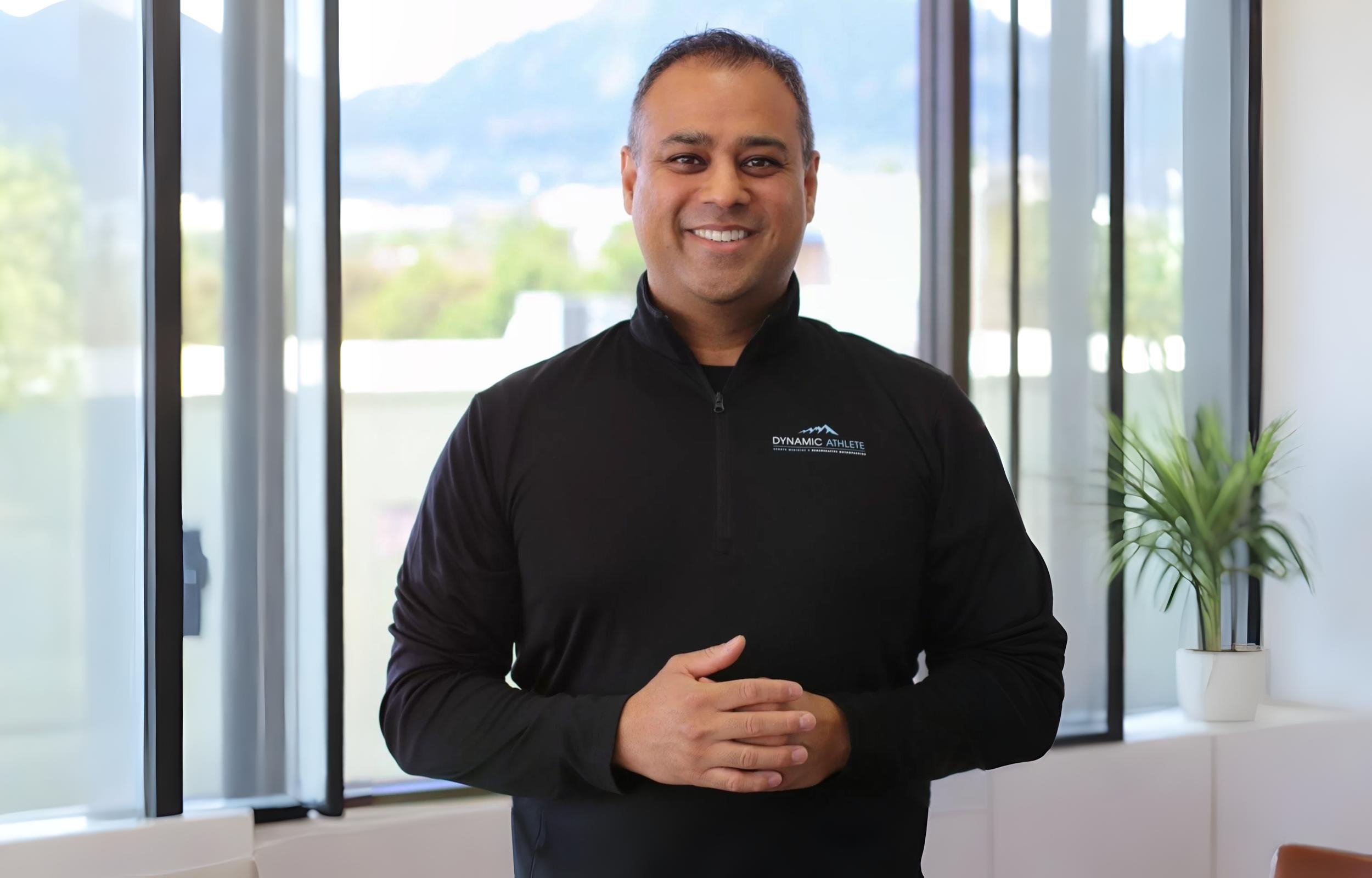
Your shoulder needs a physician who has treated hundreds of torn rotator cuffs and knows the difference between a tear that will heal with regenerative medicine and one that genuinely needs surgery. Aneesh Garg, DO, CAQ trained at Andrews Sports Medicine, the facility where professional athletes from every major sport go for exactly this decision. He is Yale residency trained, double board-certified in Sports Medicine and Internal Medicine, and serves as Team Physician for USA Hockey and U.S. Soccer.
For rotator cuff tears specifically, his Andrews fellowship training is the key differentiator. He has treated hundreds of shoulder injuries using both surgical and non-surgical approaches, giving him the clinical judgment to know which tears can heal with regenerative medicine and which genuinely require surgical repair.
Our patients with rotator cuff tears consistently report significant improvements in pain, strength, and return to activity.
One patient with full-thickness tears measuring 6mm and 8mm in both shoulders received shockwave, PRP, and MFAT over two months. He waited a year and a half before posting his review specifically to confirm the results were lasting. At 65, he plays ice hockey three times a week.
Another patient who saw too many people his age with negative results after rotator cuff surgery tried the non-surgical option first. His shoulder is progressing better than expected and he considers it a complete success. Surgery is no longer needed.
One patient who had been struggling with a shoulder injury for a year and a half after swimming the Catalina Channel is finally back in the pool, biking, and lifting weights after shockwave and EMTT at Dynamic Athlete.
Yes, many rotator cuff tears can heal without surgery using regenerative medicine. Partial-thickness tears and some full-thickness tears respond well to treatment protocols that stimulate tendon repair and restore blood flow to the damaged tissue. The key is the tear’s size, location, and how much muscle atrophy has occurred. Our Dynamic PRP+ and Dynamic Stem Cell+ protocols deliver concentrated healing factors directly into the torn tendon under ultrasound guidance. Over 90% of our patients self-report a 75% or greater improvement, all without surgery. One patient with full-thickness tears in both shoulders plays ice hockey three times a week at age 65 after treatment here.
Yes. PRP is particularly effective for rotator cuff tears because the tendons in the rotator cuff have naturally poor blood supply. PRP concentrates your own platelets and growth factors, then delivers them directly into the tear under ultrasound guidance. This creates a localized healing environment that the tendon cannot generate on its own. Our Dynamic PRP+ protocol uses precise concentration ratios and image-guided placement that most clinics do not offer. Dr. Garg’s fellowship training at Andrews Sports Medicine included extensive shoulder work with professional athletes. One patient avoided rotator cuff surgery entirely and described his outcome as a complete success.
Stem cell therapy provides a deeper regenerative response for larger or more complex rotator cuff tears. Your body’s own cells are harvested from bone marrow aspirate (BMA) or adipose tissue through micro-fragmented adipose tissue (MFAT), concentrated, and injected directly into the damaged tendon. These cells differentiate into tendon and connective tissue, promoting structural repair. Our Dynamic Stem Cell+ protocol is particularly valuable for full-thickness tears or tears where significant tissue loss has occurred. Dr. Garg combines stem cell therapy with shockwave and PRP in a layered approach. One patient with 6mm and 8mm full-thickness tears in both shoulders recovered fully using this combination.
Focused shockwave therapy stimulates new blood vessel formation in the rotator cuff tendon, breaks down calcification deposits, and reduces scar tissue that limits shoulder mobility. EMTT, paired with shockwave in our Dynamic Shockwave+ protocol, penetrates deeper into tissue to accelerate cellular repair and reduce chronic pain signaling. This combination is especially valuable as a pre-treatment before PRP or stem cell injections, preparing the tissue to respond better to regenerative therapy. Dr. Garg founded ASTI and trains clinicians nationally on proper shockwave application using Storz Medical devices. One swimmer who struggled with a shoulder injury for 1.5 years is finally back in the pool after shockwave and EMTT.
Most patients notice meaningful improvement in pain and range of motion within four to eight weeks of their initial treatment. Tissue remodeling continues for three to six months as the tendon heals and strengthens. Compared to surgical recovery, which typically requires four to six months in a sling and restricted activity, regenerative treatment allows most patients to maintain daily function throughout the healing process. Dynamic Shockwave+ often provides early pain relief within the first few sessions. Dr. Garg structures your protocol timeline based on your tear severity and activity goals, so you know what to expect at each stage. One patient described being lightyears ahead of where she was before treatment.
We treat bilateral rotator cuff tears regularly. Both shoulders can be addressed in the same treatment cycle using our Dynamic PRP+, Dynamic Stem Cell+, and Dynamic Shockwave+ protocols. For patients with tears in both shoulders, we also incorporate Dynamic Mind+ (EXOMIND) for neurological healing optimization, which enhances the body’s overall recovery capacity across multiple treatment sites simultaneously. Dynamic Athlete is the only practice in the country offering all five proprietary modalities under one roof. Dr. Garg creates a coordinated bilateral treatment plan based on the severity of each shoulder. One patient with full-thickness tears in both shoulders was treated over two months and now plays hockey three times a week at 65.
Most clinics offering non-surgical rotator cuff treatment use a single modality. We layer Dynamic PRP+, Dynamic Stem Cell+, Dynamic Shockwave+ with EMTT, and Dynamic Mind+ for neurological optimization into a customized protocol based on your tear size, tissue quality, and goals. Dr. Garg’s fellowship at Andrews Sports Medicine, where professional athletes are treated for exactly these injuries, combined with his role as Team Physician for USA Hockey and U.S. Soccer, means your shoulder gets the same level of clinical precision applied to elite athletes. No other practice in Boulder can match this combination of credentials, protocols, and technology. One patient with a year of shoulder pain who had tried everything found complete resolution after a three-week protocol here.
Founder, Sports Medicine and Regenerative Physician
Dr. Garg is double board-certified in Sports Medicine and Internal Medicine. He completed his residency at Yale School of Medicine and his sports medicine fellowship at the Andrews Sports Medicine and Orthopaedic Center (ASMI) in 2015, the same institution that treats MLB, NFL, and NCAA athletes. He serves as Team Physician for USA Hockey and U.S. Soccer, and is the Founder and Medical Director of the American Shockwave Training Institute (ASTI). Dr. Garg is teaching faculty at the Regenerative Medicine Training Institute (RMTI) and Rocky Vista University. He developed the Dynamic PRP+, Dynamic Stem Cell+, Dynamic Shockwave+, Dynamic Core+, and Dynamic Mind+ protocols used at this practice. Learn more about Dr. Garg’s credentials and training.
Physician Assistant
McKenna works alongside Dr. Garg in all aspects of clinical care, from patient evaluation through regenerative procedures. She is trained in our proprietary Dynamic PRP+, Dynamic Shockwave+, and Dynamic Core+ protocols under Dr. Garg’s direct supervision. At Dynamic Athlete, our PA does not operate independently on regenerative cases. McKenna works under the same physician who designed the treatment plan, ensuring consistency and precision at every step.
Practice Manager
Nicole manages all non-clinical operations at Dynamic Athlete. With backgrounds in both interior design and business, she transformed the clinic space into the boutique sports medicine environment our patients experience today. Nicole handles scheduling, insurance coordination, and practice operations, bringing a level of personal attention and genuine hospitality that patients notice the moment they walk in.
Clinical Coordinator
Tara coordinates your clinical journey from initial consultation through follow-up care. When your treatment plan involves multiple modalities, such as Dynamic Shockwave+ combined with Dynamic PRP+, Tara manages the scheduling, communication, and logistics so nothing falls through the cracks. She is your primary point of contact between appointments.
Therapy Puppy
Mila is an official member of the Dynamic Athlete team. She greets patients, reduces anxiety, and helps create the welcoming environment that distinguishes our practice from a typical medical office. Every detail at Dynamic Athlete, from Mila to the office design, is built around making your experience as comfortable as your treatment is effective.
Talk with our team about whether you're a candidate. Care is directed by Aneesh Garg, DO, CAQ, here in Boulder.
Request a consult No obligation. We'll help you understand your options.