
Patellar tendinitis, commonly called jumper’s knee, is the inflammation or degeneration of the patellar tendon that connects your kneecap to your shinbone. This tendon absorbs enormous force every time you jump, land, run, squat, or change direction. When it becomes damaged, every one of those movements produces pain just below the kneecap that progressively worsens with activity.
In Boulder, patellar tendinitis is common in skiers, runners, basketball and volleyball players, and anyone who loads their knees aggressively in training. It is one of the most stubborn tendon conditions because the patellar tendon is under constant stress in daily life. You cannot rest it completely without stopping all weight-bearing activity. Many patients I see have tried eccentric exercises, patellar straps, and rest for months without resolution. The tendon has shifted from acute inflammation to chronic degeneration, and degenerated tendon tissue will not heal with rest alone. It needs a targeted regenerative stimulus.
The standard treatment for patellar tendinitis is eccentric strengthening exercises, activity modification, patellar tendon straps, and anti-inflammatory medication. These can help mild cases, but chronic patellar tendinopathy that has persisted beyond three to six months rarely responds to these measures alone. Cortisone injections near the patellar tendon are generally avoided because of the risk of tendon weakening and rupture.
When conservative treatment fails, surgical options include debridement of the damaged tendon or, in severe cases, surgical repair. Surgery for patellar tendinitis requires months of rehabilitation and a prolonged return-to-sport timeline. For athletes and active adults in Boulder who depend on their knees for skiing, running, jumping, and training, that recovery window is significant. The gap between “eccentric exercises are not working” and “surgery” is where regenerative medicine and shockwave therapy provide the most value.
At Dynamic Athlete, patellar tendinitis is treated with our most effective tendon protocols, led by Dynamic Shockwave+.
Focused extracorporeal shockwave therapy (ESWT) delivers concentrated acoustic energy directly into the damaged patellar tendon. This stimulates neovascularization, triggers a controlled inflammatory response that restarts healing in degenerated tissue, and promotes collagen reorganization within the tendon. EMTT (Extracorporeal Magnetotransduction Therapy) is paired with shockwave to penetrate deeper into the tendon, accelerating cellular metabolism and reducing the chronic pain signaling that develops with persistent patellar tendinopathy. We use Storz Medical devices exclusively for true focused shockwave delivery. Radial pressure waves scatter energy and cannot target the patellar tendon insertion with the same precision.
I founded the American Shockwave Training Institute (ASTI) and train clinicians nationally on shockwave protocols for tendon conditions. Patellar tendinitis is one of the most well-studied shockwave applications, and proper device selection and energy parameters directly determine outcomes.
For patients with significant tendon degeneration or partial tearing, Dynamic PRP+ is layered with shockwave. PRP concentrates your own growth factors and delivers them directly into the damaged tendon under ultrasound guidance. The patellar tendon has limited vascularity, making PRP particularly valuable for creating the healing environment the tendon cannot generate on its own.
For healing optimization, Dynamic Mind+ (EXOMIND/ExoTMS) can enhance neurological recovery and pain modulation throughout the treatment process. Dynamic Core+ (EMSELLA/HIFEM) strengthens the pelvic floor and core muscles that support knee biomechanics, reducing the compensatory loading patterns that contributed to the patellar tendinopathy in the first place.
Dynamic Athlete is the only practice in the country offering all five proprietary modalities under one roof, which means we build a layered protocol based on the severity, chronicity, and location of your tendon damage rather than applying the same treatment to every knee. Your protocol is customized to get you back to the activities your patellar tendon needs to support.
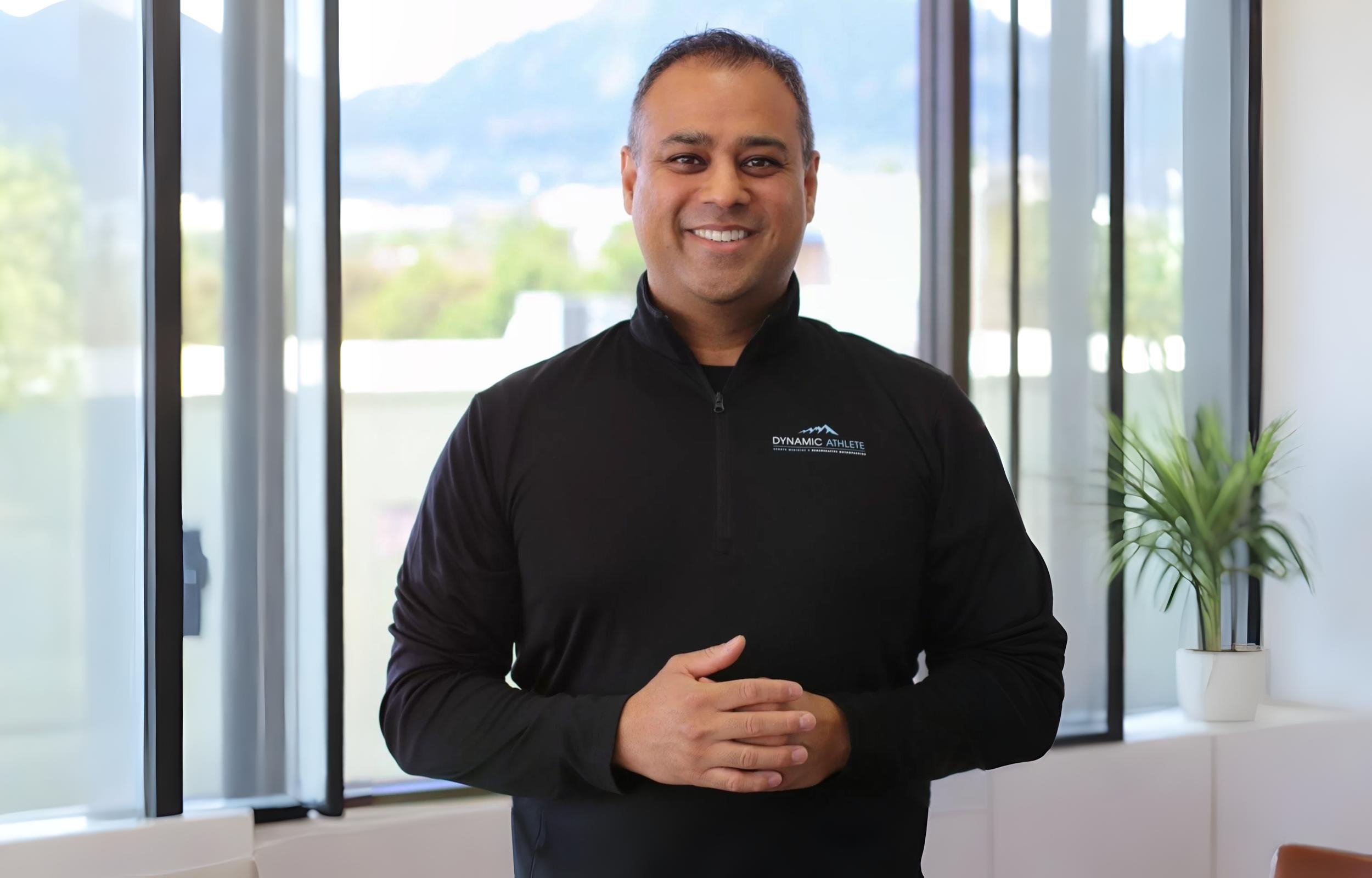
Patellar tendinitis is the injury that keeps you from doing the thing you love most: pushing your legs hard. Aneesh Garg, DO, CAQ has treated this condition in athletes at every level, from weekend warriors to the professionals he serves as Team Physician for USA Hockey and U.S. Soccer. His Yale residency and Andrews Sports Medicine fellowship gave him the tendon expertise. His founding of ASTI means he developed the shockwave protocols other physicians now learn for conditions exactly like yours.
For patellar tendinitis, his ASTI founder role is directly relevant. Shockwave is a primary treatment for chronic patellar tendinopathy, and outcomes depend on proper device selection and energy protocols. Dr. Garg developed these protocols and teaches them nationally. His sports medicine background means he understands the loading demands athletes place on the patellar tendon and can build return-to-sport protocols that match your training goals.
Our patients with patellar tendinitis and knee tendon conditions report rapid improvement in pain and return to activity.
One patient with meniscus and other knee issues from a skiing incident had shockwave, EMTT, and PRP that greatly improved his knee without invasive surgery. He would not hesitate to return if he ever had a need for treatment again.
One former NCAA athlete who had been dealing with chronic pain and inflammation for two years saw resolution after one shockwave treatment and described the care as world-class and worth every penny.
One runner with a knee injury had a plan from Dr. Garg that healed it without surgery and got her back to full training and running. These outcomes reflect the same protocols we apply to patellar tendinitis.
Yes. Focused shockwave therapy is one of the most well-studied treatments for chronic patellar tendinopathy. It delivers concentrated acoustic energy into the degenerated tendon, stimulating new blood vessel formation and restarting the healing process. Our Dynamic Shockwave+ protocol pairs focused shockwave with EMTT using Storz Medical devices for a deeper therapeutic effect than shockwave alone. Dr. Garg founded ASTI and trains clinicians nationally on shockwave protocols for tendon conditions. Over 90% of our patients self-report a 75% or greater improvement, all without surgery. One former NCAA athlete described chronic pain and inflammation resolving after one treatment.
Yes. PRP is effective for patellar tendinitis, particularly when the tendon shows significant degeneration or partial tearing. Your own blood is drawn, concentrated to isolate platelets and growth factors, then injected directly into the damaged tendon under ultrasound guidance. The patellar tendon has limited blood supply, making PRP valuable for creating a healing environment the tissue cannot generate alone. Our Dynamic PRP+ protocol is typically layered with Dynamic Shockwave+ for patellar conditions. For healing optimization, Dynamic Mind+ (EXOMIND) can enhance neurological recovery. Dr. Garg determines the right combination based on your imaging and exam findings.
Most patients with patellar tendinitis respond well to three to six sessions of Dynamic Shockwave+ spaced one week apart, often combined with PRP injection. Some patients notice meaningful improvement after the first two to three sessions. Chronic cases that have persisted for a year or more may benefit from the full protocol. Each session includes both focused shockwave and EMTT, delivering more comprehensive treatment per visit than clinics using a single modality. Dr. Garg adjusts the protocol based on how your tendon responds. One patient’s knee greatly improved through shockwave and PRP without invasive surgery.
Eccentric exercises help mild patellar tendinitis by stimulating collagen reorganization in the tendon. But when the condition has persisted beyond three to six months, the tendon has typically shifted from inflammation to chronic degeneration. Degenerated tendon tissue cannot be exercised back to health because the cellular healing process has stalled. It needs a regenerative stimulus to restart. Our Dynamic Shockwave+ protocol with EMTT triggers neovascularization and cellular repair that eccentric exercises alone cannot achieve. When combined with Dynamic PRP+ for deeper tissue regeneration, the treatment addresses what exercises miss. Dr. Garg evaluates why your current approach has stalled.
Yes. Skiing places significant load on the patellar tendon during turns, moguls, and downhill braking. Boulder’s ski population makes patellar tendinitis one of the most frequently seen conditions at Dynamic Athlete. The repetitive eccentric loading pattern during skiing is particularly damaging to the patellar tendon over time. Our Dynamic Shockwave+ and Dynamic PRP+ protocols are designed to restore the tendon and get you back to the mountain. Dr. Garg’s sports medicine training at Andrews and his role as Team Physician for USA Hockey and U.S. Soccer bring athlete-specific expertise to your treatment plan.
In most cases, yes. Unlike surgical treatment which requires extended immobilization, regenerative treatment with Dynamic Shockwave+ and Dynamic PRP+ allows most patients to continue modified training throughout their protocol. Dr. Garg provides specific activity guidelines that protect the healing tendon while maintaining as much training capacity as possible. The goal is to keep you active during recovery, not to shut you down. Dynamic Shockwave+ often produces early pain relief that makes training more comfortable within the first few sessions. Your activity level is adjusted based on how the tendon responds at each visit.
Most clinics treat patellar tendinitis with eccentric exercises, bracing, and PT. When those fail, they refer to surgery. We use Storz Medical focused shockwave paired with EMTT in our Dynamic Shockwave+ protocol, combined with Dynamic PRP+ for deeper tendon regeneration. Dr. Garg founded ASTI (American Shockwave Training Institute) and trains physicians nationally on shockwave for tendon conditions. His fellowship at Andrews Sports Medicine and his role as Team Physician for USA Hockey and U.S. Soccer mean your knee gets the same clinical precision applied to professional athletes. No other practice in Boulder offers this combination.
Founder, Sports Medicine and Regenerative Physician
Dr. Garg is double board-certified in Sports Medicine and Internal Medicine. He completed his residency at Yale School of Medicine and his sports medicine fellowship at the Andrews Sports Medicine and Orthopaedic Center (ASMI) in 2015, the same institution that treats MLB, NFL, and NCAA athletes. He serves as Team Physician for USA Hockey and U.S. Soccer, and is the Founder and Medical Director of the American Shockwave Training Institute (ASTI). Dr. Garg is teaching faculty at the Regenerative Medicine Training Institute (RMTI) and Rocky Vista University. He developed the Dynamic PRP+, Dynamic Stem Cell+, Dynamic Shockwave+, Dynamic Core+, and Dynamic Mind+ protocols used at this practice. Learn more about Dr. Garg’s credentials and training.
Physician Assistant
McKenna works alongside Dr. Garg in all aspects of clinical care, from patient evaluation through regenerative procedures. She is trained in our proprietary Dynamic PRP+, Dynamic Shockwave+, and Dynamic Core+ protocols under Dr. Garg’s direct supervision. At Dynamic Athlete, our PA does not operate independently on regenerative cases. McKenna works under the same physician who designed the treatment plan, ensuring consistency and precision at every step.
Practice Manager
Nicole manages all non-clinical operations at Dynamic Athlete. With backgrounds in both interior design and business, she transformed the clinic space into the boutique sports medicine environment our patients experience today. Nicole handles scheduling, insurance coordination, and practice operations, bringing a level of personal attention and genuine hospitality that patients notice the moment they walk in.
Clinical Coordinator
Tara coordinates your clinical journey from initial consultation through follow-up care. When your treatment plan involves multiple modalities, such as Dynamic Shockwave+ combined with Dynamic PRP+, Tara manages the scheduling, communication, and logistics so nothing falls through the cracks. She is your primary point of contact between appointments.
Therapy Puppy
Mila is an official member of the Dynamic Athlete team. She greets patients, reduces anxiety, and helps create the welcoming environment that distinguishes our practice from a typical medical office. Every detail at Dynamic Athlete, from Mila to the office design, is built around making your experience as comfortable as your treatment is effective.
Talk with our team about whether you're a candidate. Care is directed by Aneesh Garg, DO, CAQ, here in Boulder.
Request a consult No obligation. We'll help you understand your options.