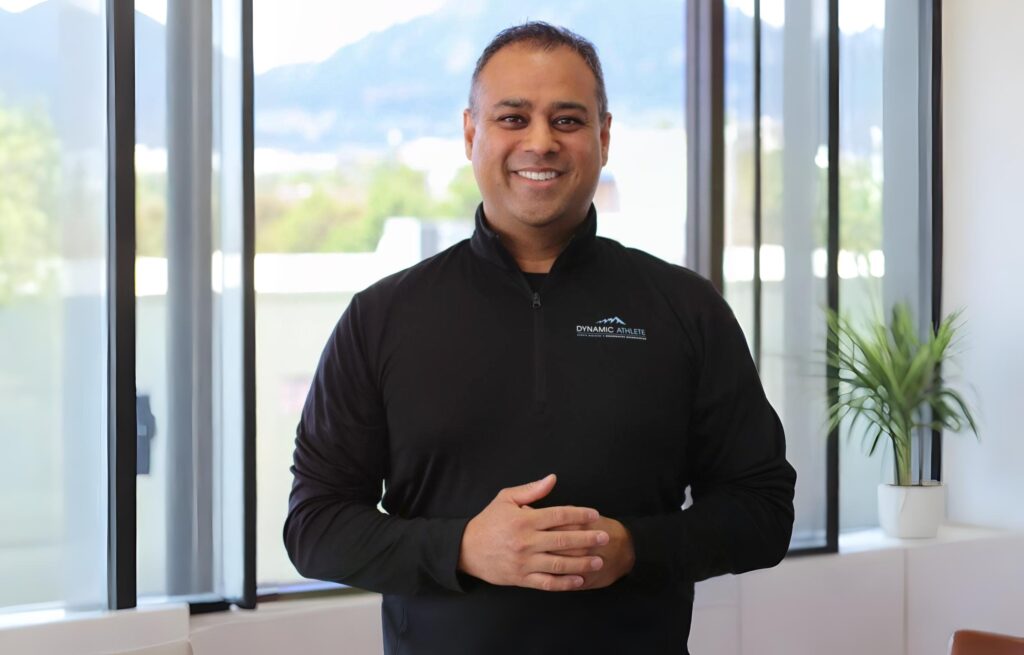
Have you diligently shown up for physical therapy, done your home exercises, and rested your injury, only to find yourself sitting in your car still in pain months later? In this episode of The Regen Doc, Dr. Aneesh Garg explains why failing physical therapy isn’t your fault, but rather a sign of an underlying structural problem that exercises alone simply cannot fix. This episode is a must-listen for anyone feeling stuck in the traditional “PT, steroid shot, surgery” pipeline who wants to understand why their rehab has plateaued. Tune in to discover the crucial four-to-six-week timeline for evaluating PT progress, the hidden truth about insurance-driven healthcare, and how regenerative medicine can finally help you break the cycle of chronic pain.
Main Topics Covered
- The Broken Foundation: Why physical therapy is brilliant for rehab and strengthening but cannot fix damaged structural tissue alone.
- Four Reasons You Aren’t Healing: Breaking down whether your lack of progress is due to an effort issue, a lack of pushing by the PT, a missed diagnosis, or a changing condition.
- The 4-to-6-Week Rule: The exact timeline to use when determining if physical therapy is actually working or if it’s time to pivot your treatment plan.
- The Systemic Healthcare Problem: How the traditional medical pipeline often pushes you toward surgery simply because it’s what insurance is willing to cover.
- The Value of Re-evaluation: Why your doctor needs to actively look at your imaging in context with your body, rather than just relying on a written radiologist’s report.
- Case Study (Frozen Shoulder): How missing the root cause—such as neglecting the posterior capsule—can leave you stuck in pain for months unnecessarily.
- Surgery is Not a Guarantee: A look at the staggering statistic that 44% of patients still experience pain after orthopedic surgery, making it far from a guaranteed fix.
Key Takeaways
- Failing PT is Information, Not Failure: If you put in the work without results, it simply means you need a different medical approach to fix the root structural issue before rehab can be effective.
- Insurance Manages Decline: Relying solely on insurance-covered options often limits your healing potential, as standard insurance models are typically designed to manage decline rather than keep you highly active.
- Don’t Settle for Stagnation: If your physical therapist or doctor keeps pushing the exact same plan for months without any progress, it is time to walk out and seek a second opinion.
- Regenerative Medicine Buys Back Time: Advanced regenerative treatments can address the core injury natively, allowing you to avoid the operating room and accelerate your return to the activities you love.
If you or a loved one is feeling frustrated by a lack of progress in physical therapy, please follow, like, and share The Regen Doc podcast so others can discover these alternative healing options!
Connect with Dr. Aneesh Garg: To learn more about his practice, read up on non-surgical alternatives, and see if regenerative medicine is right for you, visit DynamicAthlete.com.
Chapters
- 0:00 Intro: welcome to The Regen Doc
- 1:16 Hook: you did everything right in PT and nothing changed
- 2:17 Why PT can’t fix a structural problem: the broken foundation and the four reasons
- 4:58 The four to six week rule: when enough is enough
- 6:32 Who is reading your MRI? Look at your own imaging
- 9:28 The frozen shoulder everyone missed, and buying back time
- 12:04 PT, steroid shot, surgery: the old paradigm and the insurance trap
- 17:45 A message to PTs and docs: what are we doing?
Questions this episode answers
How long should I do physical therapy before trying something else?
The quick and dirty answer is four to six weeks. I tell my PT colleagues that is the window: if you are not seeing a tangible difference somewhere between the three and six week mark, it is time to look at something different. If you have been in PT longer than six weeks with no real change, go get another opinion. Otherwise six weeks becomes six months, and six months becomes years.
Why is physical therapy not working for my injury?
PT is brilliant at rehab and strengthening, but if the tissue is damaged, exercises cannot fix that. When there is a structural problem, you are trying to build a house on a broken foundation, and no amount of home exercise overcomes it. In my office I look at four reasons: you are not working hard enough, your PT is not pushing you, something was missed, or something changed. Most of the time it is not an effort problem.
Is it my fault that physical therapy did not work?
No. If you showed up three times a week, did your home exercises, iced and rested, PT not working is not a failure on your part. It is information. It tells me there may be a structural problem that exercises alone will not fix, and that you need something different before you go back and get stronger. Just because PT did not work this time does not mean PT does not work.
What are my options if physical therapy fails and I do not want surgery?
If the only two options you have been given are more PT or surgery, go get a second opinion. That plan is stuck in the old paradigm of PT, steroid injection, surgery. Regenerative medicine gives you a third lane: find the structural problem, treat it, and then go back to therapy and get stronger. The goal is to avoid surgery, avoid pain medication, and get better faster.
Does surgery mean my pain will go away?
No. A meaningful share of people who have surgery still have pain afterward; I cite the published figure in the episode, and it is not my number. With a high deductible plan you can spend the same money on surgery, take on all of its ramifications, and still not be better off. Before you accept those odds, I would want to know every other option first.
Should my doctor look at my MRI or just read the radiologist report?
Look at your own imaging. I cannot tell you how many times I have looked at an MRI and had a different call than the report, because I have the patient right in front of me and can correlate the picture with the exam, which is far easier than what a radiologist has to do. If whoever ordered your MRI is not pulling up the images and going over them with you, you need another opinion.
Why is my frozen shoulder not getting better with physical therapy?
Often because the work is aimed at where it hurts instead of what is driving it. A friend of mine had months of pain in the front of his shoulder, was treated as a rotator cuff or biceps problem, and started to freeze up. The real issue was the posterior capsule, which gets neglected in frozen shoulder all the time. A little work on the right area and he had motion he had not had in months.
Why pay out of pocket for regenerative medicine when insurance covers PT and surgery?
Because insurance is not looking out for your best interest. If you only go where insurance pays, you get a limited menu: PT, then a steroid shot, then surgery, each one covered. There is a cost to that path too, in time and opportunity, and with today’s deductibles a lot of it is not really covered anyway. What we do buys back time, and your time is your most valuable asset.
Can regenerative medicine help if physical therapy did not work?
That is exactly who we see. When PT has had its four to six weeks and the problem is structural, regenerative medicine can address the tissue that exercises cannot, and then PT becomes the thing that finishes the job. In our office we re-evaluate constantly: are you getting better, and if not, why? If a plan is not working, we change it rather than running the same thing for six months.
Transcript
Speaker labels are inferred from the caption export’s turn markers (a short question is Nicole, the practice manager; the rest is Dr. Garg).
Intro: welcome to The Regen Doc 0:00
Dr. Garg: Welcome to the Regen Doc podcast powered by DynamicAthlete.com. I’m your host Dr. Aneesh Garg. I’m Yale trained, Andrews trained, and a two sport US national team doctor here to help you make sense of regenerative medicine. I’m your host, Dr. Aneesh Garg. I’m a two sport US national team doctor and a regenerative medicine expert. Let’s get into it. Oh, wait. I didn’t say about the sponsorship yet.
Dr. Garg: Powered by
Dr. Garg: Yeah. Uh, welcome to the Regen Doc podcast. I’m your host, Dr. Aneesh Garg. Nope. Um, welcome to welcome to the Regen Doc podcast hosted by I feel like an idiot when I talk like this, looking in front of the camera. Um, welcome to the Regen Doc podcast. Welcome to the Regen Doc podcast powered by DynamicAthlete.com. I’m your host, Dr. Aneesh Garg. I’m a two sport US national team doctor and regenerative medicine expert. Let’s get going. Good. Whatever. We’ll keep let’s go. Oh. Um I’m just going to read it then.
Dr. Garg: The cold open. Yeah. Right.
Hook: you did everything right in PT and nothing changed 1:16
Dr. Garg: Okay. Times are good. You did everything right. You showed up to PT three times a week. You know, I tried PT for six months and nothing changed. Now what? You did everything right. You showed up to PT three times a week. You did your home exercises. You iced. You rested it. Six months later, you’re sitting in your car after your last appointment wondering if this is just what your life is now. Here’s what I want to tell you. PT not working isn’t a failure on your part. It might mean that there’s a structural problem and exercises alone won’t fix it and there are other options that you haven’t tried that you might benefit from. We’re going to get into that.
Nicole: So, a couple questions about what you just said. Let’s start with the first one. I’ve done everything my PT told me to do. I’m not lazy. I showed up. Why am I still in pain?
Why PT can’t fix a structural problem: the broken foundation and the four reasons 2:17
Dr. Garg: It’s a good It’s a good question. PT’s brilliant at rehab and strengthening. So, let me get that out off the gate. I think PT is super important. When we were talking about this in fellowship, Dr. Andrews would talk about and say the work you do is 50%. The work you do afterward in PT is 50%. So, even if you’re doing surgery or you’re doing procedures, a lot of that success is going to come from PT as well. post the difference we have in regenerative medicine. We do a lot of things pre-treatment that can make a difference. But when we’re talking about physical therapy, I think it’s a huge huge benefit to doing. But if the tissue is damaged, PT can’t fix that. If there’s a structural problem, physical therapy is going to have a difficult time overcoming that. So then you’re trying to build a house with a broken foundation. So no matter how much you do these exercises, no matter how many home exercise programs you do and you’re not getting better, that’s the challenge. This isn’t an effort problem. I often talk about this in with our patients. There’s usually four reasons why somebody’s not getting better. I talk about one either you’re not working hard enough. I say that to the patient or the athlete. Two, your PT isn’t pushing you hard enough. Three, either I missed something or four, something’s changed. It’s usually one of those four. And it can be either one. But the big thing here is that if PT is not working, it’s not usually an effort problem unless it is right. Unless you’re just not working hard enough or you’re not getting pushed hard enough or there’s not a really good understanding. And I think that’s where sometimes that fails.
Nicole: Okay, great. So, how long should I keep doing PT before I know it’s not going to work? When is enough enough? You skipped over two.
Dr. Garg: Yeah, the order didn’t make sense to me. Sorry, I didn’t realize you were going to read these. Last time you just answered the question.
Dr. Garg: Okay, I wasn’t listening to your question. Say it again.
Nicole: How long should I keep doing PT before I know it’s not going to work? When is enough enough?
The four to six week rule: when enough is enough 4:58
Dr. Garg: That’s a really good question that I tell my PT colleagues, the quick and dirty of it is four to six weeks. I tell my PT colleagues, look, you got four to six weeks with them. That’s it. If they’re not getting better in four to six weeks and you’re not seeing tangible difference, I think there’s a time where we need to look at something different. if they’re having continual challenges with getting better. And I know there’s a lot of places that’ll say, “Look, they need to come three times a week for the next three months.” I think there’s ways that we might be able to help in our clinic certainly where we can get them back quicker. I think six weeks is a really good marker and I think you should be able to tell really somewhere between that three to six week mark whether or not they’re getting better or they’re not. So, if you’re in PT longer than six weeks, I would tell you to potentially go get another opinion. And it has nothing to do with the quality of the PT standpoint. It’s just if you keep doing this, those six weeks turn into six months. Those six months turn into a year. Those year, that year turns into five years, six years, 10 years, a decade, and then what are we doing? And I think that’s really the big thing. So, that’s information for us, not failure. I don’t I don’t see it as failure. I go, this is something that we’ve sort of checked off and said, okay, we tried physical therapy. It’s hasn’t gotten to me where I need to get to. How do I do
Who is reading your MRI? Look at your own imaging 6:32
differently now? Right? And that’s where is it something from a regenerative medicine standpoint? Is it something from an imaging standpoint? And a lot of times I tell my physical therapy colleagues, if you’re ordering an MRI, which in Colorado apparently I didn’t know this, but physical therapists can order MRIs. When I was in Chicago and Nashville, that wasn’t the case. And so I think one of the other things too just from a physical therapy standpoint that if if you’re getting an MRI from a physical therapist or an ultrasound say from a physical therapist just make sure they have a really good background in it and they know what they’re doing because just ordering the imaging isn’t good enough. I can’t tell you how many times I’ve looked at the MRIs or I’ve looked at imaging and I’ve had a different call than what the report said. And I think the advantage for me is that I have the patient right in front of me and I can correlate the MRI with the patient in front of me, which is way easier than what the radiologist has to do. So I think there’s there’s a distinct advantage for for me to be able to look at the imaging, but that’s the trick of this. You have to look at your own imaging. And I think if somebody’s not looking at the images and going over with you, then I think you need another opinion. So to answer your question, four to six weeks on how long it is. And then it should be continual. It should be continual reassessment and re-evaluation. That’s why in our office when we see people coming in, we’re always checking. Are you getting better? Are you not getting better? why are you not getting better? Why? What happened here? It is a constant re-evaluation. And so even when we’re doing our treatment protocols, that’s part of the process here. So I think that’s really the big key is are we making progress or are we not? And I think that’s that’s something that people should certainly keep in mind when they’re going to physical therapy. Are we making prog progress? Are we making progress or are we not making progress? Right? And I think if anything, this is a really good time that if any of this resonates with you, I would tell you to go visit DynamicAthlete.com and read up on some of these things that can actually accelerate your healing
Dr. Garg: and can be a really good augment to your physical therapy program and help you recover faster. So, if you hear something that and you’re like, you know, that makes a lot of sense, go to DynamicAthlete.com and see and read up about it and ask your physical therapist, hey, I read up about these. What do you know about these?
The frozen shoulder everyone missed, and buying back time 9:28
Dr. Garg: You mentioned constant reevaluation. Tell me about someone who hit the PT wall and thought they were out of options. What did you find that everyone else missed? Yeah, I think I think it’s more about the value of having another pair of eyes on something and looking at things from a different lens. I think that’s super important. And so we I’ll give you an example from last night. So a good friend of ours had shoulder pain for going on for months and they were doing exercises. They couldn’t figure it out and it was all their pain was in their anterior shoulder, the front of their shoulder and they’ve been having issues, couldn’t figure it out and then they started to get frozen shoulder, right? We call it adhesive capsulitis, frozen shoulder. Couldn’t figure out what it was. They thought it was a rotator cuff issue. They thought it was a biceps issue. And then we started looking into it and it was actually a posterior capsule issue. So imagine somebody’s going into physical therapy, working on this, and saying, “This is where I hurt. This is where I hurt. This is where I hurt.”
Dr. Garg: And they keep working on the same things, but then it doesn’t lead to any change. And now he’s three months into it. And we just did a little bit of work and focused on a different area, and he’s much better. A lot of times in frozen shoulder, people neglect the posterior capsule. and and I I can’t tell you how many times that that gets missed. And so we started doing a little bit of work and I said, “When’s the last time you’re able to move your shoulder like this?” And he said, “I don’t know, months.” And so that’s kind of what I get at about the four to six week mark that we have the ability to buy back time with some of the regenerative medicine things that we’re doing. And so imagine if we got this guy back six weeks ago. It would have been six weeks of him not having to deal with this pain, not having interrupted sleep because he’s waking up because his shoulders in pain. So think about this in terms of what’s your most valuable asset? It’s your time. So if you’re toiling away in physical therapy for weeks and months, years, you’re just giving away time here. And there’s faster ways to get better. What if my PC PT said, “If this doesn’t work, the next step is surgery.” Are those really my only two options?
PT, steroid shot, surgery: the old paradigm and the insurance trap 12:04
Dr. Garg: Well, this is where I tell you go get a second opinion. Maybe maybe you need to change PTs. I mean, I think I think if that’s what your options are, then your physical therapist is stuck in the old paradigm. PT, steroid injection, surgery. If that’s the lane that you’re in, then I would tell you to go get another opinion somewhere. I I don’t think they’re just up to date on some of the things that are out there, right?
Dr. Garg: Um and so if these are the only two options presented, I’m here to tell you this is the whole reason this podcast exists. We’ve had people that have asked us to do this podcast because they said the things that you say in the office people should know about because the only thing that they know is physical therapy and surgery and if you want to add the third steroid shot fine but they said people need to know about this. So I’ve the title of the podcast I’ve tried PT for six or this episode I’ve tried PT for six months and nothing’s changed. Now what and I can’t the surgery is not the answer here. Right? So, I think that’s the challenge. And and now you’re going to go to your PT and say, “Well, wait a minute. I heard from the Regen Doc powered by DynamicAthlete.com that that here are my other options, right? And if we can talk about that, not only am I going to avoid surgery, not only am I going to avoid pain medication, but I’m actually going to get better faster. It’s a pretty good deal, right? And so I would encourage you to really look at these options and talk about what fits and what works for you. So I think that’s a really big thing. Um, again, if PT fails, quote unquote, after the four to six weeks, I don’t look at this as a bad thing. I think it’s information gathering. So, we know that if your physical therapist did what they’re supposed to do and you worked hard enough and you did what you were supposed to do, that gives us information. You need to do something different and then potentially go back to therapy and get stronger. once that’s been corrected. So just because you failed physical therapy doesn’t mean physical therapy doesn’t work. I think there’s there it’s the same thing with anything that just because it didn’t work in this moment doesn’t mean it can’t work for your issue. We just have to do something different and that’s really one of the big things. So that’s more of a systemic problem. So, this isn’t on anybody in in that regard where I’m casting blame on somebody. It’s just more of a systemic problem. Right? If your goal is to just do whatever insurance tells you to do, I’m here to tell you insurance isn’t looking out for your best interest. And there’s a lot of people that will talk about this. It’s a systemic failure. So, if you’re going to only go where insurance is covering things and you’re going to let insurance companies dictate what is being done for you, then you’re going to have limited options. You’re going to go to the physical therapist because insurance covers it. I’m going to go to a doctor and go get a steroid injection because insurance covers it. If that doesn’t work, I’m going to go get surgery because insurance covers it. So I think there’s a cost with everything. There’s opportunity cost, there’s time cost, there’s a lot of other things. So, so just because insurance covers it, quote unquote, and nowadays with people with very large deductibles, how much of it is really actually covered by insurance? So, you could spend the same amount of money with the high deductible and get that surgery with all the ramifications that come with surgery and then not be better off. 44% of people that have surgery still have pain afterward. That’s not my statistic. That’s not me just making it up. I mean, this is this is out there in terms of what the percentages are. So now you’ve got a 56% chance of having no pain after surgery. Just a little bit better than flipping a coin, right? We talk about our our outcomes in our office. Over 90% of our patients in our office are at least 75% better by their own admission post what our treatment protocols are. That’s a monster number. And I mean, that’s self-reported. I get it. I mean, we’ll get people say, “Oh, well, that’s not a real statistic.” It’s self-reported. I’m just telling you how how we gauge things in our office. But that’s an over 90% clip. That’s a monster number to put up. And so, and all of that is without surgery. All of that’s without pain medications. And so, if that’s something that is appealing to you, then I would encourage you to check out what we’re talking about here. So that’s that’s really the big thing in terms of where it’s not a PT problem, it’s more of a systemic problem in that in that capacity.
A message to PTs and docs: what are we doing? 17:45
Nicole: Okay, my last question. What’s your message to the PTs and docs out there who keep pushing the same plan for six months with no progress?
Nicole: What are we doing?
Dr. Garg: If you guys listen to this podcast long enough, I think you’re going to hear what are we doing? maybe more than you care to hear, but I it’s it’s the truth. It’s we keep going through even in our clinic and I say like, “What are we doing? If this isn’t working, what are we doing?” So, if you’re going to a PT and that’s all they’re doing and you’re not seeing any progress, walk out. because to me that’s that’s a that’s a lazy convenient way for them to take care of you. What we do in our office is not easy. It’s it’s challenging because it’s so patient centric. We’re trying to get you back as soon as possible in the best way possible in the safest way possible. And that takes a lot of again re-evaluation, making sure we’re on the right path. If we’re not, do we deviate? Are we sure we’re on the right spot? Do we need to do something different? I mean, there’s a lot of things that go into it. And so that’s why I think we get the success that we end up getting. So your question about what do I tell them? I say there’s better options out there. And I think you have to be willing to expand what your options are if you’re not getting the results that you want. If you’re satisfied with six months of people not having any progress, then I question whether or not you’re actually looking out for the best interest. And that’s at the end of the day, that’s what we have to do here. So, I think that’s really the the big piece in any of that regard. So, if any of this stuff resonates with you, I encourage you to go to DynamicAthlete.com, check that out, read about the things we have on our website and or I encourage you to check those out. Read about the things that are on the website and and make an informed decision. The whole goal of this is for you to be more informed wherever you go. How do you want me to end it? Where are we at? We’re almost at 20 minutes. So, we just have to add some close.
Nicole: Uh, is there a close?
Dr. Garg: Oh, this right here. So, if this resonates, this is exactly what we do at dynamic. Go visit DynamicAthlete.com, educate yourself about it, and then we’ll see you next time.