
Why Isn’t Regenerative Medicine Covered? Dr. Aneesh Garg, DO, CAQ on the Real Cost

Tuesday - August 25, 2026

Regenerative medicine isn’t covered by insurance — and that’s the elephant in the room. Dr. Aneesh Garg, DO, CAQ is being completely transparent about why: the insurance model was built for surgery, medication, and symptom management, not healing. Insurance coverage lags science by decades. But not covered doesn’t mean not proven — and in this episode he breaks down the real math between a PRP injection and a $30,000 to $70,000 knee replacement, why price shopping on regenerative medicine means paying twice, and why the most valuable thing you can buy back is time.

Chapters:

  • 00:00 The insurance question nobody wants to answer honestly
  • 00:47 Why doesn’t insurance cover PRP or stem cells if they work?
  • 00:52 Insurance coverage is a reimbursement policy, not a measure of evidence
  • 02:03 If insurance doesn’t cover it, it must not be proven — right?
  • 02:07 Wrong — covered treatments like steroid injections are actually harmful
  • 03:15 Focused shockwave has FDA clearance — the evidence is there
  • 04:38 Know what you’re paying for: focused shockwave vs. radial pressure waves
  • 06:30 How to think about the cost of regenerative medicine vs. surgery
  • 06:36 A knee replacement costs $30,000 to $70,000 with 6 to 12 months of recovery
  • 07:05 PRP with hyaluronic acid: fraction of the cost, no surgical complications, no time off work
  • 08:17 Case study: hockey player who couldn’t wait — paid twice for substandard PRP
  • 10:56 The real cost isn’t the treatment — it’s whether you’re going to the right place
  • 13:08 How Dr. Garg advises patients to think about the investment
  • 13:17 What patients say most: “I wish I did this sooner”
  • 14:05 50-year-old business owner: PRP vs. $50,000 knee replacement — back to activities sooner
  • 16:15 Dr. Garg’s honest take on the cost question
  • 18:44 Insurance coverage is a reimbursement policy, not a measurement of evidence
Medical Disclaimer

The Regen Doc is for educational purposes only and does not constitute medical advice or create a physician-patient relationship. Patient stories are anonymized, individual results vary, and candidacy requires a formal consultation at DynamicAthlete.com.

The Regen Doc is for educational purposes only and does not constitute medical advice or create a physician-patient relationship. Individual results vary. Candidacy requires a formal consultation at DynamicAthlete.com.

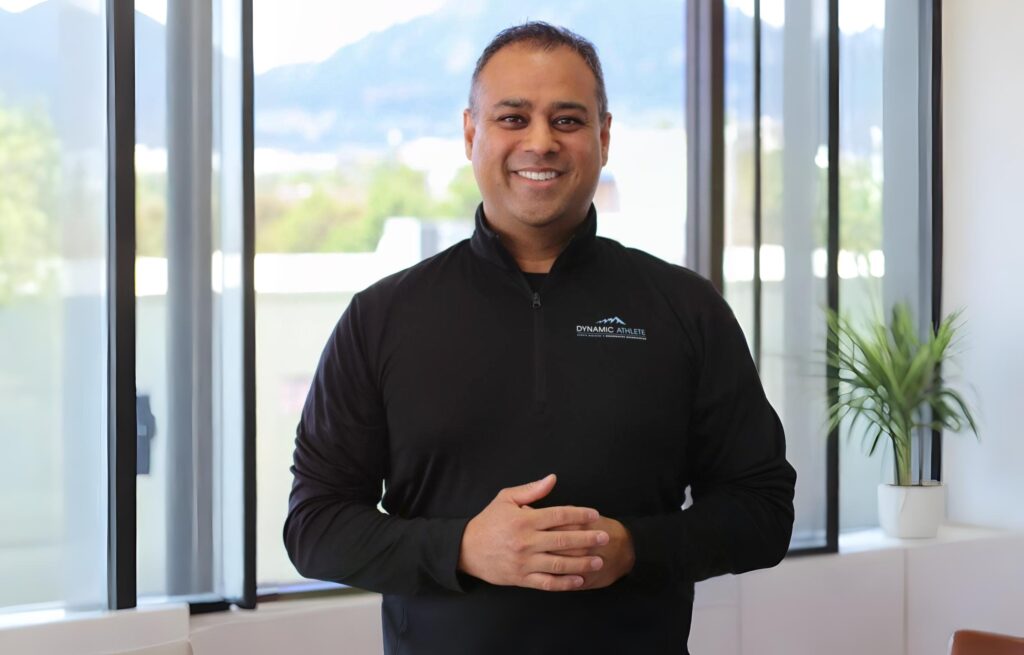
Aneesh Garg, DO, CAQ, Research Director of the DART Lab at Dynamic Athlete in Boulder, Colorado

All Dynamic PRP+ and Dynamic Stem Cell+ procedures are performed exclusively by Dr. Garg. Dynamic Shockwave+, Dynamic Mind+, and Dynamic Core+ are performed by Dr. Garg and his clinical team.

Meet Dr. Garg

Aneesh Garg, DO, CAQ. Founder of Dynamic Athlete Sports Medicine and Regenerative Orthopaedics. Yale residency trained. Andrews Sports Medicine fellowship trained. Double board-certified Sports Medicine and Internal Medicine. Team Physician USA Hockey and U.S. Soccer. Founder and Medical Director of ASTI (American Shockwave Training Institute).

Teaching faculty RMTI and Rocky Vista University. Host of The Regen Doc podcast. Dr. Garg developed the Dynamic PRP+, Dynamic Stem Cell+, Dynamic Shockwave+, Dynamic Mind+, and Dynamic Core+ protocols used at this practice.

Why Patients Trust Dr. Garg

Yale residency trained. Andrews Sports Medicine fellowship trained. Double board-certified Sports Medicine and Internal Medicine.

Yale-New Haven Hospital residency

Fellowship-trained at the American Sports Medicine Institute (ASMI) / Andrews Sports Medicine

Team Physician for USA Hockey and U.S. Soccer

Medical Director of the American Shockwave Training Institute (ASTI), training clinicians nationwide in ESWT, RPW, and EMTT

Known for physician-performed, ultrasound-guided PRP, BMA/MFAT, and shockwave-primed biologic injections

The Regen Doc Podcast

Hear Dr. Garg go deeper on this topic.

The Regen Doc breaks down real patient cases, protocol design, and what actually works vs. what the industry sells. New episodes on Apple Podcasts, Spotify, and wherever you get your podcasts.