
Tennis Elbow That Won’t Quit — Dr. Aneesh Garg, DO, CAQ on Why Steroids Make It Worse

Tuesday - July 21, 2026

You can’t open a jar. You can’t grip a coffee cup without wincing. And you don’t even play tennis. Dr. Aneesh Garg, DO, CAQ says the reason two cortisone shots, a brace, and PT haven’t fixed it is because tennis elbow isn’t an inflammation problem — it’s tissue degradation. And steroid injections don’t fix tissue degradation. They make it worse. In this episode he breaks down why the elbow is often just collateral damage from a wrist or shoulder problem, what actually heals a degenerative tendon, and how a mom of two with pain in both elbows got back to the beach with her kids using EMTT, focused shockwave, and PRP.

Chapters:

  • 0:00 Tennis elbow that won’t quit — and you don’t even play tennis
  • 0:52 Two cortisone shots, a brace, and PT — what’s actually missing
  • 1:00 Tennis elbow is tissue degradation, not inflammation — why that changes everything
  • 2:00 Steroid injections suppress tendon healing — please stop getting them
  • 3:04 The elbow is often collateral damage — the real problem is the wrist or shoulder
  • 3:21 Should I just rest it completely until it goes away?
  • 3:25 Rest weakens the tendon — active healing is different from doing nothing
  • 5:08 The motorcycle rev analogy — understanding why the elbow takes the hit
  • 7:08 What actually heals a degenerative tendon?
  • 7:12 EMTT, focused shockwave, and radial pressure waves — how they work together
  • 8:27 If you only had one treatment — focused shockwave is the most important
  • 9:26 When to add PRP or stem cells for more significant degeneration
  • 11:09 The step-wise protocol: energy medicine first, biologics second, PT third
  • 13:30 Case study: active mom of two with pain in both elbows for over a year — back on the beach
  • 17:57 If you’ve been fighting this for months, what’s your next move?
  • 18:01 Stop the steroid injections — get an ultrasound evaluation instead
  • 19:17 The big takeaway: tissue degradation requires tissue healing, not anti-inflammatories
Medical Disclaimer

The Regen Doc is for educational purposes only and does not constitute medical advice or create a physician-patient relationship. Patient stories are anonymized, individual results vary, and candidacy requires a formal consultation at DynamicAthlete.com.

The Regen Doc is for educational purposes only and does not constitute medical advice or create a physician-patient relationship. Individual results vary. Candidacy requires a formal consultation at DynamicAthlete.com.

Dr. Aneesh Garg DO CAQ Sports Medicine Physician Boulder Colorado

All Dynamic PRP+ and Dynamic Stem Cell+ procedures are performed exclusively by Dr. Garg. Dynamic Shockwave+, Dynamic Mind+, and Dynamic Core+ are performed by Dr. Garg and his clinical team.

Meet Dr. Garg

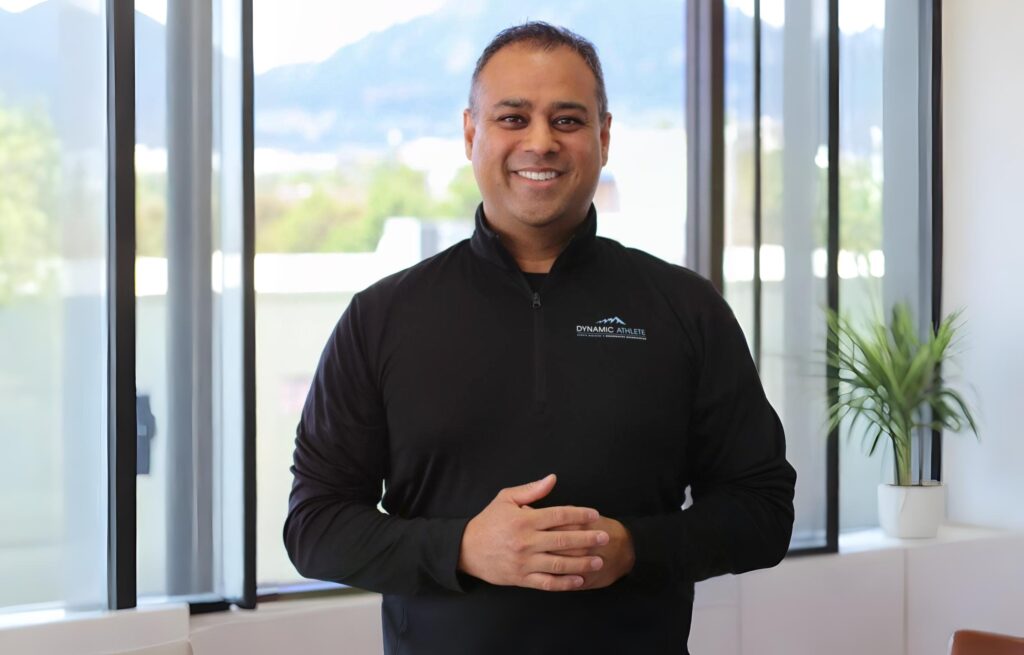
Aneesh Garg, DO, CAQ. Founder of Dynamic Athlete Sports Medicine and Regenerative Orthopaedics. Yale residency trained. Andrews Sports Medicine fellowship trained. Double board-certified Sports Medicine and Internal Medicine. Team Physician USA Hockey and U.S. Soccer. Founder and Medical Director of ASTI (American Shockwave Training Institute).

Teaching faculty RMTI and Rocky Vista University. Host of The Regen Doc podcast. Dr. Garg developed the Dynamic PRP+, Dynamic Stem Cell+, Dynamic Shockwave+, Dynamic Mind+, and Dynamic Core+ protocols used at this practice.

Why Patients Trust Dr. Garg

Yale residency trained. Andrews Sports Medicine fellowship trained. Double board-certified Sports Medicine and Internal Medicine.

Yale-New Haven Hospital residency

Fellowship-trained at the American Sports Medicine Institute (ASMI) / Andrews Sports Medicine

Team Physician for USA Hockey and U.S. Soccer

Medical Director of the American Shockwave Training Institute (ASTI), training clinicians nationwide in ESWT, RPW, and EMTT

Known for physician-performed, ultrasound-guided PRP, BMA/MFAT, and shockwave-primed biologic injections

The Regen Doc Podcast

Hear Dr. Garg go deeper on this topic.

The Regen Doc breaks down real patient cases, protocol design, and what actually works vs. what the industry sells. New episodes on Apple Podcasts, Spotify, and wherever you get your podcasts.