
Frozen shoulder, clinically known as adhesive capsulitis, is one of the most frustrating conditions a patient can experience. The capsule surrounding your shoulder joint thickens and tightens, forming adhesions that progressively restrict your range of motion. It develops in stages: first the pain increases, then the stiffness sets in, and eventually your shoulder becomes so locked up that simple movements like reaching for a shelf or fastening a seatbelt become nearly impossible.
In Boulder, frozen shoulder takes away your ability to climb, paddle, swim, ski, and do the overhead movements your active lifestyle depends on. Many patients I see have been told to wait it out because frozen shoulder “resolves on its own” in one to three years. That is technically true for some patients, but spending one to three years unable to use your shoulder is not a treatment plan. Others are offered manipulation under anesthesia, which forces the shoulder open while you are sedated. Shockwave therapy and regenerative medicine offer a faster, less aggressive path to restoring your shoulder without waiting years or forcing it open.
The standard approach to frozen shoulder is patience and physical therapy. Patients are told to stretch, do PT exercises, and wait for the condition to cycle through its stages. When conservative treatment fails to make progress, the next options are cortisone injections into the joint capsule, hydrodilatation (injecting fluid to stretch the capsule), or manipulation under anesthesia where the surgeon physically forces the shoulder through its range of motion while you are sedated.
Each of these approaches has limitations. Cortisone provides temporary pain relief but does not address the capsular adhesions. Manipulation under anesthesia carries risks including fracture and re-tearing of the capsule. And simply waiting one to three years means losing one to three years of your active life. For patients in Boulder who define themselves by what their bodies can do, that timeline is not acceptable when treatments exist that can accelerate recovery dramatically.
At Dynamic Athlete, the primary treatment for frozen shoulder is Dynamic Shockwave+, which has shown remarkable effectiveness at breaking through the adhesive process and restoring range of motion faster than conventional treatment.
For cases that do not settle with conservative care, physician-performed PRP therapy is one of the treatment options we offer.
Focused extracorporeal shockwave therapy (ESWT) delivers concentrated acoustic energy directly into the thickened shoulder capsule and surrounding adhesions. This breaks down the fibrotic tissue restricting your movement, stimulates new blood vessel formation to promote healing, and reduces the chronic pain signaling that prevents you from progressing in therapy. We use Storz Medical devices exclusively because they deliver true focused shockwave. Radial pressure waves, which many clinics offer, scatter energy across a broad area and cannot target the capsular adhesions with the same precision.
EMTT (Extracorporeal Magnetotransduction Therapy) is paired with shockwave in our Dynamic Shockwave+ protocol. EMTT generates high-energy magnetic fields that penetrate deep into the shoulder joint, accelerating cellular metabolism and reducing pain at the neurological level. For frozen shoulder specifically, EMTT addresses the deep capsular inflammation that shockwave alone may not fully reach.
I founded the American Shockwave Training Institute (ASTI) and train clinicians nationally on shockwave protocols for conditions exactly like frozen shoulder. The difference between a patient who recovers in weeks versus one who waits years often comes down to the device, the protocol, and the clinician’s understanding of capsular pathology.
Our patients with frozen shoulder report rapid, meaningful improvement in both pain and range of motion.
One swimmer who had been struggling to heal a shoulder injury for 1.5 years is finally back in the pool, biking, and lifting weights after shockwave and EMTT at Dynamic Athlete.
Yes. Frozen shoulder responds well to focused shockwave therapy, which breaks down the capsular adhesions restricting your range of motion without the risks of manipulation under anesthesia or surgical intervention. Our Dynamic Shockwave+ protocol combines focused shockwave with EMTT to address both the structural adhesions and the chronic pain signaling that prevents progress. This approach can dramatically compress the recovery timeline that conventional treatment stretches over one to three years. Over 90% of our patients self-report a 75% or greater improvement, all without surgery. One athletic trainer with a year of shoulder pain who had tried every treatment available experienced complete resolution after a three-week protocol here.
Focused shockwave delivers concentrated acoustic energy directly into the thickened shoulder capsule and the adhesions restricting your movement. This mechanical energy breaks down fibrotic tissue, stimulates new blood vessel formation in the capsule, and restarts the healing process in tissue that has stalled. Our Dynamic Shockwave+ protocol uses Storz Medical devices that deliver true focused shockwave, not radial pressure waves. Radial waves scatter energy and cannot target capsular adhesions with the same precision. Dr. Garg founded ASTI and trains clinicians nationally on proper shockwave protocols for shoulder conditions. One patient went from severe restriction to full activity after a three-week protocol.
EMTT (Extracorporeal Magnetotransduction Therapy) generates high-energy magnetic fields that penetrate deeper into the shoulder joint than shockwave alone. For frozen shoulder, this is critical because the inflammation and adhesions are deep within the joint capsule. EMTT accelerates cellular metabolism in the inflamed capsule, reduces chronic pain signaling at the neurological level, and enhances the overall regenerative response. When paired with focused shockwave in our Dynamic Shockwave+ protocol, EMTT addresses layers of the condition that shockwave alone may not fully reach. Dynamic Athlete is one of very few practices in Colorado offering EMTT. Dr. Garg selects this combination based on the stage and severity of your adhesive capsulitis.
Yes. PRP can be valuable for frozen shoulder when there is significant inflammation within the joint capsule. Your own blood is drawn, concentrated to isolate platelets and growth factors, then injected directly into the shoulder capsule under ultrasound guidance. These growth factors reduce inflammation and promote healthy tissue remodeling. Our Dynamic PRP+ protocol is typically layered with Dynamic Shockwave+ for frozen shoulder rather than used alone. The combination addresses both the mechanical adhesions and the inflammatory environment simultaneously. For healing optimization, Dynamic Mind+ (EXOMIND) can further enhance recovery. Dr. Garg determines whether PRP adds value based on your imaging and the stage of your condition.
Most patients see meaningful improvement in range of motion and pain within three to six weeks of starting treatment. Some patients experience significant relief after just a few shockwave sessions. The total number of sessions depends on the severity and duration of your frozen shoulder, but the typical Dynamic Shockwave+ protocol for adhesive capsulitis is three to eight sessions, spaced one to two weeks apart. Compare this to the conventional timeline of one to three years of waiting for the condition to resolve on its own. Dr. Garg sets clear expectations during your evaluation and adjusts the protocol based on how your shoulder responds. One patient saw complete resolution in three weeks.
Physical therapy alone often fails with frozen shoulder because the adhesions in the capsule are too dense for stretching and strengthening exercises to break through. PT can maintain what range you have and prevent further loss, but it cannot mechanically disrupt the fibrotic tissue locking your shoulder. That is exactly what focused shockwave does. Our Dynamic Shockwave+ protocol with EMTT delivers the mechanical and cellular stimulus needed to break down adhesions that PT cannot reach. Dr. Garg evaluates why your previous treatment has stalled and builds a protocol that targets the adhesive process directly rather than working around it. One patient had tried PT, OT, acupuncture, chiropractics, laser, massage, and cortisone before finding resolution here.
Most clinics treat frozen shoulder with cortisone injections and physical therapy, which addresses symptoms without targeting the adhesive process. We use Storz Medical focused shockwave paired with EMTT in our Dynamic Shockwave+ protocol to mechanically break down capsular adhesions and accelerate recovery. When needed, we layer Dynamic PRP+ for deeper anti-inflammatory support. Dr. Garg founded ASTI (American Shockwave Training Institute) and trains other physicians nationally on shockwave protocols for shoulder conditions. His fellowship at Andrews Sports Medicine and his role as Team Physician for USA Hockey and U.S. Soccer mean your shoulder gets elite-level precision. One patient who had tried every available treatment for a year found complete resolution after three weeks here.
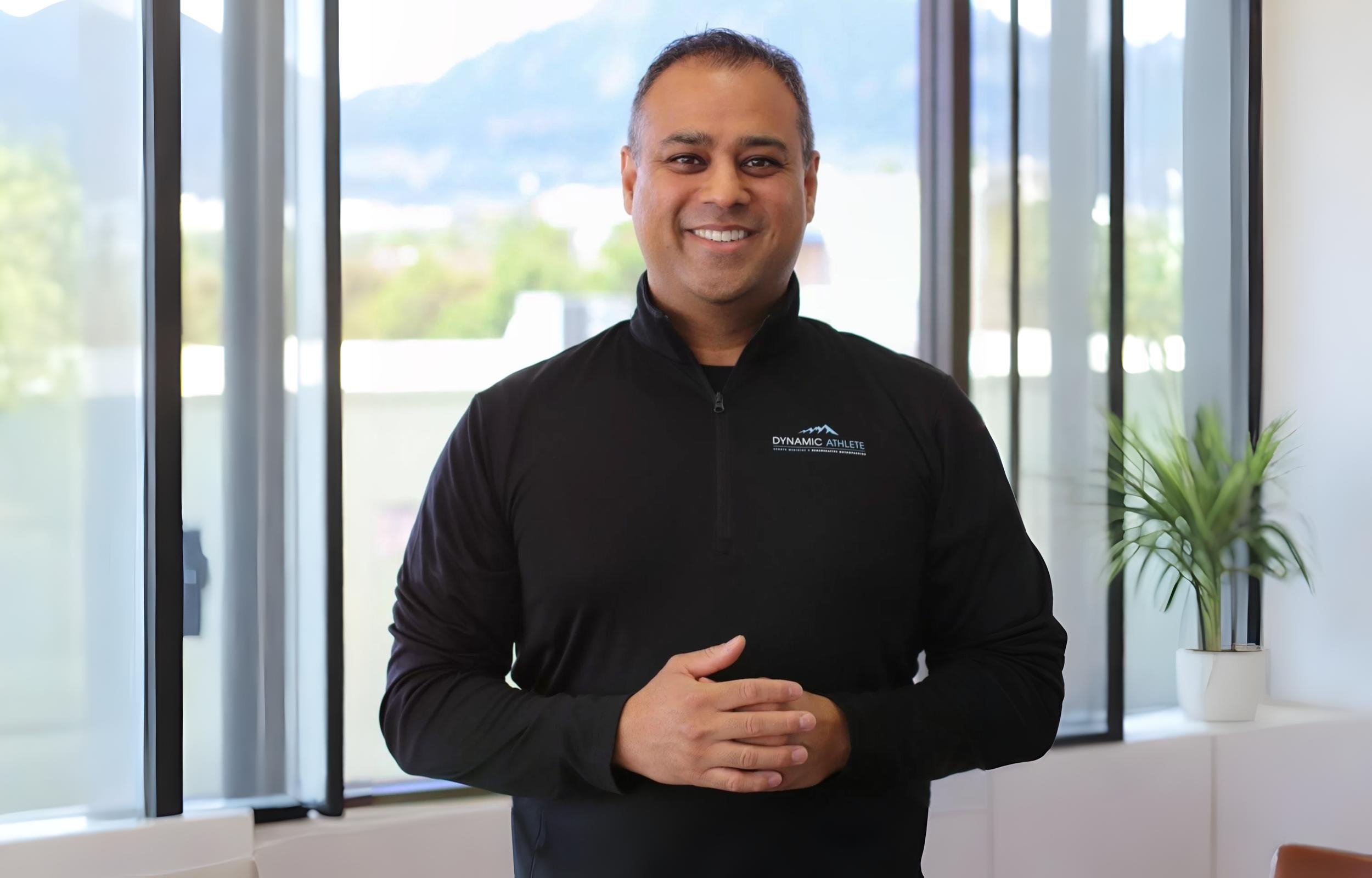
Founder, Sports Medicine and Regenerative Physician
Dr. Garg is double board-certified in Sports Medicine and Internal Medicine. He completed his residency at Yale School of Medicine and his sports medicine fellowship at the Andrews Sports Medicine and Orthopaedic Center (ASMI) in 2015, the same institution that treats MLB, NFL, and NCAA athletes. He serves as Team Physician for USA Hockey and U.S. Soccer, and is the Founder and Medical Director of the American Shockwave Training Institute (ASTI). Dr. Garg is teaching faculty at the Regenerative Medicine Training Institute (RMTI) and Rocky Vista University. He developed the Dynamic PRP+, Dynamic Stem Cell+, Dynamic Shockwave+, Dynamic Core+, and Dynamic Mind+ protocols used at this practice. Learn more about Dr. Garg’s credentials and training.
Physician Assistant
McKenna works alongside Dr. Garg in all aspects of clinical care, from patient evaluation through regenerative procedures. She is trained in our proprietary Dynamic PRP+, Dynamic Shockwave+, and Dynamic Core+ protocols under Dr. Garg’s direct supervision. At Dynamic Athlete, our PA does not operate independently on regenerative cases. McKenna works under the same physician who designed the treatment plan, ensuring consistency and precision at every step.
Practice Manager
Nicole manages all non-clinical operations at Dynamic Athlete. With backgrounds in both interior design and business, she transformed the clinic space into the boutique sports medicine environment our patients experience today. Nicole handles scheduling, insurance coordination, and practice operations, bringing a level of personal attention and genuine hospitality that patients notice the moment they walk in.
Clinical Coordinator
Tara coordinates your clinical journey from initial consultation through follow-up care. When your treatment plan involves multiple modalities, such as Dynamic Shockwave+ combined with Dynamic PRP+, Tara manages the scheduling, communication, and logistics so nothing falls through the cracks. She is your primary point of contact between appointments.
Therapy Puppy
Mila is an official member of the Dynamic Athlete team. She greets patients, reduces anxiety, and helps create the welcoming environment that distinguishes our practice from a typical medical office. Every detail at Dynamic Athlete, from Mila to the office design, is built around making your experience as comfortable as your treatment is effective.
Talk with our team about whether you're a candidate. Care is directed by Aneesh Garg, DO, CAQ, here in Boulder.
Request a consult No obligation. We'll help you understand your options.