
A meniscus tear is one of the most common knee injuries. The meniscus is a C-shaped piece of cartilage that acts as a shock absorber between your thighbone and shinbone. Each knee has two menisci, and when one tears, you feel it immediately: pain along the joint line, swelling, stiffness, and sometimes a catching or locking sensation when you try to move.
In Boulder, meniscus tears happen on the ski slopes, on trail runs, on the bike, and sometimes just stepping off a curb. For active people, a torn meniscus does not just mean knee pain. It means losing the ability to pivot, squat, hike, and trust your knee when it matters most. Many patients I see have been told they need arthroscopic surgery to trim or repair the meniscus. But surgery removes tissue your knee needs, and once that tissue is gone, it never comes back. Regenerative medicine offers a way to heal the meniscus without sacrificing the cartilage that protects your joint.
The standard treatment for a meniscus tear follows a familiar pattern. Rest, ice, physical therapy, and anti-inflammatory medication for the initial phase. If symptoms persist, arthroscopic surgery to either repair the tear or perform a partial meniscectomy, which means removing the damaged portion of the meniscus.
Here is the problem most patients are never told: removing meniscal tissue accelerates the development of osteoarthritis. Studies show significantly higher rates of knee OA in patients who have had meniscal surgery compared to those who pursued conservative treatment. Each meniscectomy removes shock-absorbing tissue your knee depends on. The more you remove, the faster the joint degenerates. For younger, active patients in Boulder who plan to use their knees for decades, this long-term trade-off matters more than the short-term convenience of a quick arthroscopic procedure.
At Dynamic Athlete, we treat meniscus tears using a regenerative approach designed to heal the damaged cartilage rather than remove it.
Dynamic PRP+ concentrates your own blood platelets and growth factors, then delivers them directly into and around the meniscal tear under ultrasound guidance. These growth factors stimulate cellular repair and reduce the chronic inflammation that prevents natural healing. High-dose PRP therapy is particularly effective for degenerative meniscus tears and small to medium traumatic tears where the tissue structure is still intact enough to respond to a healing stimulus.
Dynamic Stem Cell+ uses your body’s own regenerative cells from bone marrow aspirate (BMA) or adipose tissue through micro-fragmented adipose tissue (MFAT) for larger or more complex tears. These cells can differentiate into cartilage tissue, providing the raw materials your meniscus needs to rebuild. For patients with significant tear size or multiple areas of damage, stem cell therapy adds a regenerative depth that PRP alone cannot achieve.
Dynamic Shockwave+ combines focused shockwave therapy with EMTT using Storz Medical devices. For meniscus tears, shockwave reduces chronic pain signaling, stimulates new blood vessel formation in the joint environment, and accelerates the cellular response to regenerative injections. EMTT penetrates deeper to enhance cellular metabolism. We commonly use Dynamic Shockwave+ as a preparatory treatment before PRP or stem cell injections to optimize tissue receptivity. I founded the American Shockwave Training Institute (ASTI) and train clinicians nationally on these protocols.
For healing optimization, Dynamic Mind+ (EXOMIND/ExoTMS) enhances neurological recovery and pain modulation. We also use Dynamic Core+ (EMSELLA/HIFEM) for foundational stability support, since core and pelvic floor strength directly impacts knee biomechanics and reduces the compensatory loading patterns that contributed to the meniscal injury in the first place.
Dynamic Athlete is the only practice in the country offering all five proprietary modalities under one roof, which allows us to build a layered protocol based on your tear type, location, and functional goals. We do not use a single treatment for every meniscus tear. Your protocol is tailored to the specific characteristics of your injury and the activities you need your knee to support.
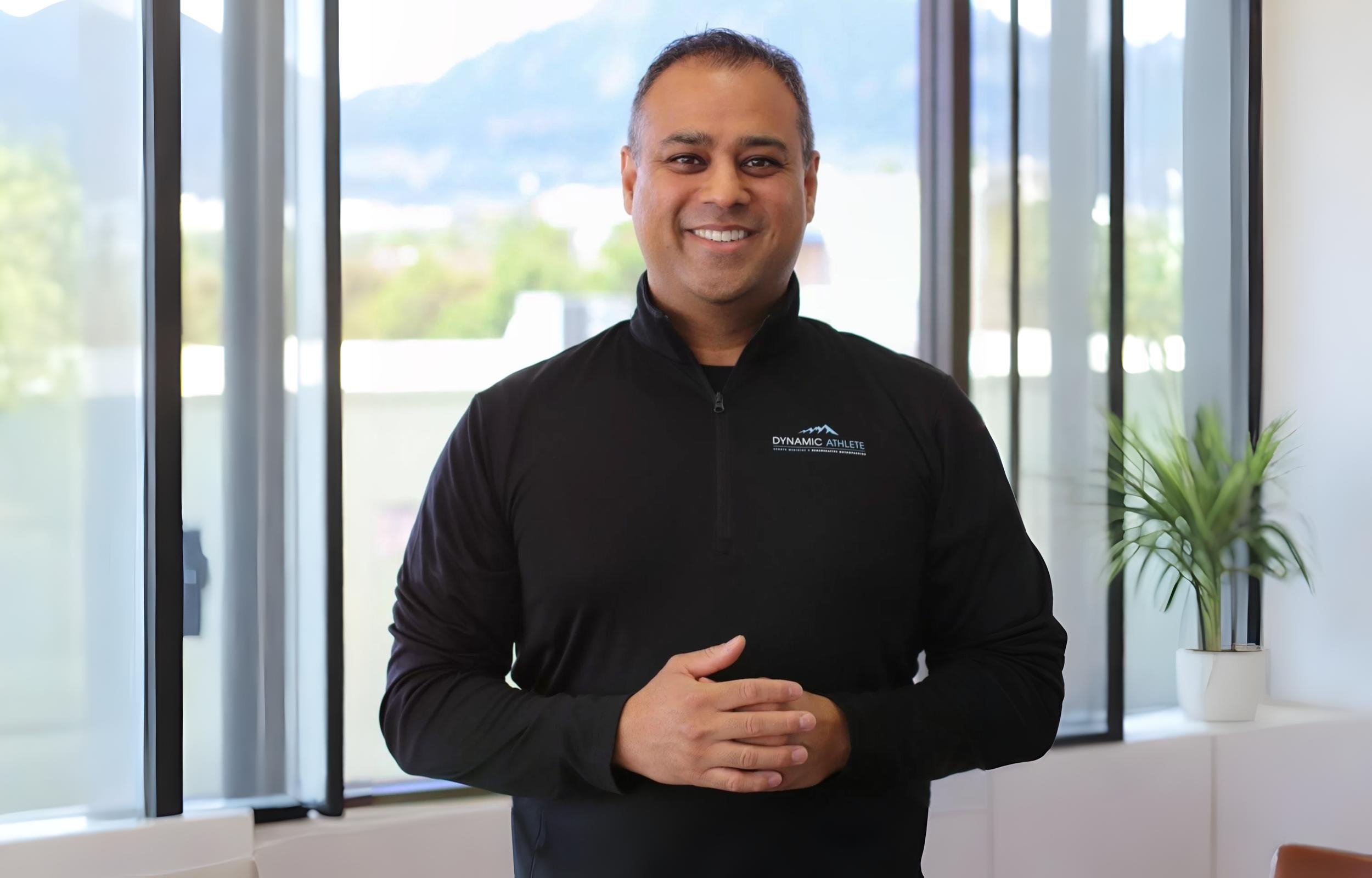
The decision to scope a meniscus or preserve it changes the trajectory of your knee for decades. Aneesh Garg, DO, CAQ has the training to make that call honestly. Yale residency trained. Andrews Sports Medicine fellowship trained, where the best athletes in the world receive joint-preserving care. Double board-certified in Sports Medicine and Internal Medicine. Team Physician for USA Hockey and U.S. Soccer. He knows when to operate and when regenerative medicine gives your meniscus a better future.
For meniscus tears, his dual training matters. He understands both the surgical and non-surgical pathways for meniscal injuries, which means he can accurately assess whether your tear has the characteristics to respond to regenerative treatment or genuinely requires surgical intervention. This honest assessment is what separates evidence-based care from a clinic that applies the same treatment to every knee.
Our patients with meniscus tears consistently report significant improvements in pain, function, and return to activity without the lengthy recovery that comes with surgery.
One patient with meniscus and other knee issues from a skiing incident had shockwave, EMTT, and PRP that greatly improved his knee without invasive surgery. He described how the treatment allowed him to avoid the lengthy recovery that comes with surgical intervention and would not hesitate to return.
Another patient who struggled for years after ACL surgery received PRP and shockwave at Dynamic Athlete, and his knee now feels remarkably close to normal. The follow-up had no pressure for unnecessary repeat treatments.
One runner with a crack in her kneecap had a plan from Dr. Garg that healed it without surgery and got her back to full training.
Yes, many meniscus tears can heal without surgery when treated with the right regenerative protocol. The key factors are the tear’s size, location, and blood supply. Tears in the outer third of the meniscus (the vascularized zone) have the best healing potential. Our Dynamic PRP+ and Dynamic Stem Cell+ protocols deliver concentrated healing factors directly to the damaged tissue under ultrasound guidance, stimulating repair that conservative treatment alone cannot achieve. Over 90% of our patients self-report a 75% or greater improvement, all without surgery. One patient with meniscus and other knee issues from skiing avoided surgery entirely and described greatly improved function.
Yes. PRP is particularly effective for meniscus tears because the meniscus has limited blood supply in its central portions, making natural healing difficult. PRP concentrates your own platelets and growth factors and delivers them directly into the tear under ultrasound guidance, creating a localized healing environment the tissue cannot generate on its own. Our Dynamic PRP+ protocol uses precise concentration ratios and image-guided placement that most clinics do not offer. Dr. Garg’s fellowship training at Andrews Sports Medicine included extensive work with meniscal injuries in athletes. One patient who struggled for years after knee surgery found that PRP and shockwave brought his knee remarkably close to normal.
Stem cell therapy provides a deeper regenerative response for larger meniscus tears or tears where significant cartilage loss has occurred. Your body’s own regenerative cells are harvested from bone marrow aspirate (BMA) or adipose tissue through MFAT, concentrated, and injected directly into the damaged meniscus. These cells can differentiate into cartilage tissue, providing the structural building blocks your meniscus needs to rebuild. Our Dynamic Stem Cell+ protocol is often combined with Dynamic Shockwave+ to prepare the tissue environment before injection. Dr. Garg layers these treatments based on your specific tear characteristics. One patient with degeneration in both knees uses MFAT, PRP, and HA as her ongoing protocol to keep running and hiking pain-free.
Yes. Focused shockwave therapy combined with EMTT in our Dynamic Shockwave+ protocol reduces chronic pain signaling, stimulates new blood vessel formation in the joint, and enhances the cellular environment for tissue repair. For meniscus tears, we commonly use Dynamic Shockwave+ as a preparatory treatment before PRP or stem cell injections, optimizing how the tissue responds to regenerative therapy. EMTT penetrates deeper to accelerate cellular metabolism. Dr. Garg founded ASTI and trains clinicians nationally on shockwave protocols using Storz Medical devices. This is not the same as radial pressure waves that many clinics use. Radial waves are not true shockwave. One patient’s knee greatly improved through shockwave and PRP without invasive surgery.
Most patients notice improvement in pain and function within four to six weeks of PRP or stem cell treatment, with continued gains over three to six months as the meniscus heals and strengthens. Compared to arthroscopic surgery, which requires two to six weeks of limited activity and three to six months of rehabilitation, regenerative treatment allows most patients to maintain daily function throughout recovery. Dynamic Shockwave+ often provides early pain relief within the first few sessions. Dr. Garg sets clear expectations during your evaluation and adjusts your protocol based on how your tissue responds. One runner with a knee injury was back to full training without surgery.
This is more common than many patients realize. The sacroiliac (SI) joint at the base of your spine can refer pain into the hip, buttock, and knee. When the SI joint is the actual source, treating the meniscus alone will not resolve your symptoms. At Dynamic Athlete, we evaluate the full kinetic chain, not just the joint that hurts. Our comprehensive examination assesses SI joint function as part of every knee evaluation to ensure we treat the actual source, not just the symptom. Dynamic PRP+ and Dynamic Stem Cell+ can treat SI joint dysfunction once properly diagnosed. One patient told she needed a full knee replacement had her SI joint identified as the real problem and is now pain-free.
Most clinics offering non-surgical meniscus treatment use a single modality. We layer Dynamic PRP+, Dynamic Stem Cell+, Dynamic Shockwave+ with EMTT, and Dynamic Mind+ for healing optimization into a customized protocol based on your tear type, location, and goals. The critical difference is that removing meniscal tissue through surgery accelerates joint degeneration, while regenerative treatment aims to heal it. Dr. Garg’s training at Yale and Andrews Sports Medicine, combined with his role as Team Physician for USA Hockey and U.S. Soccer, means your knee gets the same caliber of care given to professional athletes. No other practice in Boulder offers all five modalities. One patient avoided the lengthy surgical recovery and described greatly improved function.
Across PRP, Stem Cell, Shockwave, EXOMIND, and EMSELLA. Tracked across active adults, postpartum patients, athletes, and surgery-avoiders.
Founder, Sports Medicine and Regenerative Physician
Dr. Garg is double board-certified in Sports Medicine and Internal Medicine. He completed his residency at Yale School of Medicine and his sports medicine fellowship at the Andrews Sports Medicine and Orthopaedic Center (ASMI) in 2015, the same institution that treats MLB, NFL, and NCAA athletes. He serves as Team Physician for USA Hockey and U.S. Soccer, and is the Founder and Medical Director of the American Shockwave Training Institute (ASTI). Dr. Garg is teaching faculty at the Regenerative Medicine Training Institute (RMTI) and Rocky Vista University. He developed the Dynamic PRP+, Dynamic Stem Cell+, Dynamic Shockwave+, Dynamic Core+, and Dynamic Mind+ protocols used at this practice. Learn more about Dr. Garg’s credentials and training.
Physician Assistant
McKenna works alongside Dr. Garg in all aspects of clinical care, from patient evaluation through regenerative procedures. She is trained in our proprietary Dynamic PRP+, Dynamic Shockwave+, and Dynamic Core+ protocols under Dr. Garg’s direct supervision. At Dynamic Athlete, our PA does not operate independently on regenerative cases. McKenna works under the same physician who designed the treatment plan, ensuring consistency and precision at every step.
Practice Manager
Nicole manages all non-clinical operations at Dynamic Athlete. With backgrounds in both interior design and business, she transformed the clinic space into the boutique sports medicine environment our patients experience today. Nicole handles scheduling, insurance coordination, and practice operations, bringing a level of personal attention and genuine hospitality that patients notice the moment they walk in.
Clinical Coordinator
Tara coordinates your clinical journey from initial consultation through follow-up care. When your treatment plan involves multiple modalities, such as Dynamic Shockwave+ combined with Dynamic PRP+, Tara manages the scheduling, communication, and logistics so nothing falls through the cracks. She is your primary point of contact between appointments.
Therapy Puppy
Mila is an official member of the Dynamic Athlete team. She greets patients, reduces anxiety, and helps create the welcoming environment that distinguishes our practice from a typical medical office. Every detail at Dynamic Athlete, from Mila to the office design, is built around making your experience as comfortable as your treatment is effective.
Talk with our team about whether you're a candidate. Care is directed by Aneesh Garg, DO, CAQ, here in Boulder.
Request a consult No obligation. We'll help you understand your options.