
When chronic tendon pain refuses to go away, many active adults begin searching for advanced treatment options. Terms like ESWT, RPW, and EMTT start appearing—along with searches like “shockwave therapy near me.”
But what most patients don’t realize is that these technologies are not interchangeable.
At Dynamic Athlete, we are the only clinic in Colorado offering EMTT, ESWT, and RPW under one roof. That matters—because the right technology depends on the tissue, the depth, and the stage of injury.
Let’s break down the differences and why having all three changes outcomes.
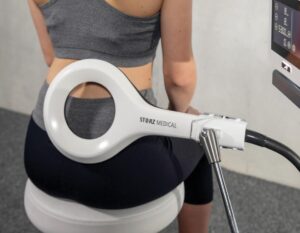
Why Chronic Tendon Injuries Stall
Conditions like plantar fasciitis, Achilles tendinopathy, patellar tendon pain, and chronic shoulder irritation often become “stuck.”
What’s happening biologically?
- Collagen fibers become disorganized
- Blood flow decreases
- Inflammation becomes chronic
- Tissue remodeling slows
Traditional rehab improves strength—but sometimes the tissue itself needs a biological stimulus.
That’s where shockwave-based therapies and EMTT come in.
What Is ESWT (Extracorporeal Shockwave Therapy)?
ESWT delivers focused acoustic energy into injured tissue. It is often considered the gold standard for deeper tendon injuries.
Best for:
- Chronic plantar fasciitis
- Achilles tendon degeneration
- Patellar tendinopathy
- Calcific shoulder tendinitis
When patients search for shockwave therapy plantar fasciitis, ESWT is often the most effective option—especially for deep, stubborn cases.
How It Works:
- Stimulates new blood vessel formation
- Increases collagen production
- Disrupts chronic pain signaling
- Promotes tissue regeneration
What Is RPW (Radial Pressure Wave Therapy)?
RPW is a type of shockwave therapy that delivers energy more superficially and spreads outward radially.
Best for:
- Muscle tightness
- Mild to moderate tendon irritation
- Myofascial trigger points
- Early-stage overuse injuries
RPW is often less intense than ESWT and may be used as an introduction to shockwave-based therapy.
When people search for shockwave therapy near me, many clinics only offer RPW—but market it broadly as “shockwave.”
Not all shockwave therapies are the same.
What Is EMTT (Extracorporeal Magnetotransduction Therapy)?
EMTT is not shockwave therapy. It uses high-frequency electromagnetic pulses to stimulate cellular activity deep within tissue.
Unlike acoustic waves, EMTT:
- Penetrates deeper without mechanical impact
- Stimulates cellular metabolism
- Enhances tissue repair at a molecular level
- Can treat bone, joint, and muscle conditions
EMTT is particularly useful for:
- Chronic joint degeneration
- Bone stress reactions
- Advanced tendinopathy
- Combined joint and tendon pain
It works exceptionally well when paired with ESWT.
EMTT vs ESWT vs RPW: What’s the Real Difference?
| Therapy | Energy Type | Depth | Best For |
|---|---|---|---|
| RPW | Radial acoustic waves | Superficial | Muscle & early tendon issues |
| ESWT | Focused acoustic waves | Deep | Chronic tendon degeneration |
| EMTT | Electromagnetic pulses | Deep cellular | Joint & advanced tissue repair |
The key is matching the technology to the injury—not forcing every injury into one tool.
Why Most Clinics Only Offer One
Many clinics advertise shockwave therapy, but only provide one version—often RPW.
This limits treatment options because:
- Deep injuries may not respond to superficial therapy
- Joint degeneration may need cellular stimulation
- Severe tendinopathy may require focused energy
Without multiple tools, care becomes “one size fits all.”
At Dynamic Athlete, we evaluate the injury first—then choose the technology.
Shockwave Therapy Cost: What Are You Paying For?
Patients often search shockwave therapy cost before understanding the difference between technologies.
Pricing depends on:
- Type of therapy (RPW vs ESWT vs EMTT)
- Depth and complexity of injury
- Number of sessions required
- Integration with rehab
Lower-cost options often reflect limited technology. More advanced systems (like ESWT and EMTT) require greater investment and expertise.
Value should be measured in outcomes—not just session price.
Shockwave Therapy for Plantar Fasciitis
One of the most researched uses of ESWT is shockwave therapy plantar fasciitis treatment.
Chronic plantar fasciitis often becomes resistant to:
- Stretching
- Orthotics
- Rest
- Cortisone injections
ESWT stimulates healing in the fascia, while EMTT can support deeper cellular repair if degeneration is present.
This combination is particularly powerful for long-standing heel pain.
Why Having All Three Matters
Injuries evolve.
- Early-stage irritation may respond to RPW.
- Chronic degeneration may require ESWT.
- Advanced joint involvement may benefit from EMTT.
At Dynamic Athlete, we can shift technologies as tissue response changes—without referring you elsewhere.
That flexibility leads to:
- Faster recovery
- Better outcomes
- Reduced reliance on injections
- Fewer surgical referrals
Who Is a Candidate for These Therapies?
You may benefit if:
- Pain has persisted beyond 8–12 weeks
- Rehab improved strength but not symptoms
- You want non-invasive options
- You have chronic plantar fasciitis
- Tendon pain limits performance
If you’ve searched for shockwave therapy near me, make sure you’re asking which type is offered.
Why Dynamic Athlete Is Different
Dynamic Athlete is the only clinic in Colorado equipped with:
- RPW
- Focused ESWT
- EMTT
But technology alone isn’t the difference.
Our approach includes:
- Movement-based diagnosis
- Precision targeting
- Rehab integration
- Performance-focused recovery
We don’t just treat pain. We restore durability.
Final Thoughts
EMTT vs ESWT vs RPW isn’t about which therapy is best. It’s about which therapy is best for your injury, at your stage, and for your goals.
If chronic tendon pain or plantar fasciitis has stalled your progress, the right technology—combined with the right plan—can make all the difference.
At Dynamic Athlete, we offer all three because performance recovery requires options, not limitations.