
In the realm of regenerative medicine, hyaluronic acid injections have emerged as a versatile treatment option for a variety of injuries and conditions. Known for their ability to promote tissue repair and reduce inflammation, these injections offer new hope for individuals seeking non-surgical solutions to their musculoskeletal woes. In this blog, we’ll explore the science behind hyaluronic acid injections and the injuries they can effectively treat.
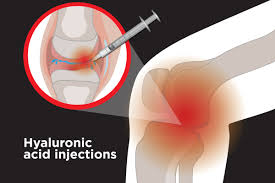
Hyaluronic acid is a naturally occurring substance found in the body, particularly in connective tissues, joints, and skin. It plays a crucial role in maintaining hydration, lubrication, and elasticity within tissues. In the context of injury treatment, hyaluronic acid injections work by supplementing the body’s natural supply of this substance, promoting tissue healing and reducing inflammation.
Injuries Treated with Hyaluronic Acid Injections:
- Osteoarthritis (OA): Perhaps the most well-known application of hyaluronic acid injections is in the treatment of osteoarthritis, a degenerative joint disease characterized by cartilage breakdown and inflammation. By injecting hyaluronic acid directly into the affected joint, healthcare providers aim to improve lubrication, reduce pain, and enhance mobility for individuals with OA.
- Cartilage Injuries: Hyaluronic acid injections show promise in the treatment of cartilage injuries, such as tears or defects in the knee or other joints. By promoting cartilage repair and reducing inflammation, these injections may help improve symptoms and prevent further joint damage.
Hyaluronic acid injections offer a minimally invasive and effective treatment option for a range of musculoskeletal injuries and conditions. By harnessing the natural healing properties of hyaluronic acid, healthcare providers can provide targeted relief for individuals grappling with joint pain, inflammation, and limited mobility. Whether used to treat osteoarthritis, tendonitis, bursitis, cartilage injuries, or soft tissue injuries, hyaluronic acid injections represent a promising approach to restoring function and improving quality of life for patients seeking non-surgical solutions to their musculoskeletal ailments.
At Dynamic Athlete, we have extensive experience with shoulder arthritis, elbow arthritis, wrist/hand arthritis, hip and knee arthritis, and ankle/foot arthritis that are treated with our innovative modalities to help you get back to doing what you love without surgery! Contact us today!
Think of Hyaluronic Acid (HA) injections as the biological equivalent of a high-end oil change for your joints. While HA is a superstar in the skincare world for its hydrating powers, its role in orthopedics is even more high-stakes. In healthy joints, HA acts as both a lubricant and a shock absorber, keeping movement fluid and painless. When injury or wear-and-tear strikes, your natural supply thins out, turning a once-smooth hinge into a grinding gear.
The Mechanism: “Viscosupplementation”
The technical term for this treatment is viscosupplementation. By injecting a concentrated dose of HA directly into the joint capsule (most commonly the knee), doctors are essentially restoring the “viscoelastic” properties of the synovial fluid. This doesn’t just grease the wheels; it also:
-
Reduces Friction: Prevents further mechanical wear on the cartilage.
-
Buffers Inflammation: Signals the body to dampen the inflammatory response that causes “flares.”
-
Stimulates Natural Production: Interestingly, the presence of injected HA often nudges the body to start producing more of its own natural lubricant again.
Expanding the Scope: From Knees to Tendons
While historically reserved for osteoarthritis, sports medicine has begun utilizing HA for soft tissue injuries. Recent studies suggest that HA can aid in the healing of chronic tendon issues, like Achilles tendonitis or rotator cuff tears, by creating a protective sheath that allows the tendon to glide without snagging on surrounding tissue.
The Reality Check
It is important to be candid: HA is a management tool, not a “cure-all” time machine. It works best for mild to moderate injuries. If a joint is already “bone-on-bone,” the results will likely be underwhelming. Furthermore, the effects aren’t instantaneous; most patients feel the peak benefits about four to six weeks post-injection, with relief lasting anywhere from six months to a year.