
Hip and knee arthritis can quietly erode your ability to stay active. What starts as stiffness or soreness can progress into daily pain, reduced mobility, and the looming suggestion of joint replacement surgery. For many active adults, that recommendation feels premature—especially when the goal is to stay mobile, independent, and athletic for as long as possible.
This is where stem cell therapy for arthritis becomes an important conversation. At Dynamic Athlete, we help patients understand when regenerative options like stem cell therapy may allow them to avoid joint replacement, delay surgery, or improve function without permanently altering the joint.
Why Joint Replacement Isn’t Always the First Answer
Joint replacement can be life-changing for the right candidate—but it’s also irreversible. Artificial joints have a lifespan, recovery can be long, and high-impact activity is often discouraged afterward.
Many patients are advised to “wait until it’s bad enough,” which often means:
- Living with pain for years
- Reducing activity
- Losing strength and confidence
- Accepting progressive decline
For active adults, this approach doesn’t align with long-term performance or quality of life.
What Is Stem Cell Therapy for Arthritis?
Stem cell therapy arthritis treatments aim to support joint health by using your body’s own biologic material to reduce inflammation, improve joint environment, and support tissue repair.
Rather than replacing the joint, stem cell therapy focuses on:
- Preserving existing cartilage
- Reducing inflammatory signaling
- Supporting joint mechanics
- Improving pain and function
For patients exploring stem cell therapy near me, the appeal is clear: a non-surgical option that works with the body, not against it.
Stem Cell Therapy for Knee Arthritis
One of the most common applications is stem cell therapy for knee arthritis, particularly in early to moderate stages.
This approach may be appropriate for patients with:
- Cartilage thinning (not bone-on-bone collapse)
- Activity-related knee pain
- Swelling and stiffness
- Declining tolerance for walking, hiking, or training
A stem cell knee injection is performed with precision to target the joint structures contributing to pain and degeneration. When combined with proper rehab and load management, many patients experience meaningful improvements in function.
What About Hip Arthritis?
Hip arthritis can be just as limiting—and often progresses quietly until daily activities become painful.
Stem cell therapy may help hip arthritis patients who:
- Have early to moderate degeneration
- Want to delay or avoid surgery
- Are limited by pain but still maintain joint space
- Are not ideal surgical candidates
As with the knee, patient selection is critical. Stem cell therapy is not designed to rebuild severely collapsed joints—but it can be effective before that stage.
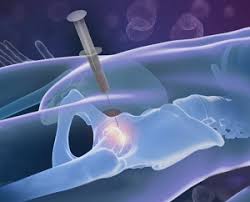
Stem Cell Therapy vs Joint Replacement
Understanding the difference is essential.
Joint Replacement:
- Removes and replaces the joint
- Long recovery timeline
- Activity restrictions
- Irreversible
Stem Cell Therapy:
- Preserves the joint
- Minimally invasive
- Lower downtime
- Designed to delay or avoid surgery
For many patients, stem cell therapy isn’t about “never having surgery”—it’s about making surgery unnecessary for as long as possible.
Who Is a Good Candidate for Stem Cell Therapy?
Stem cell therapy works best when:
- Arthritis is early to moderate
- Joint structure is still intact
- Pain is activity-limiting but not constant at rest
- Patients are willing to address strength and mechanics
Patients searching for a stem cell clinic near me should understand that outcomes depend more on diagnosis and execution than location alone.
At Dynamic Athlete, every patient undergoes a thorough evaluation before stem cell therapy is considered.
Why Stem Cell Therapy Sometimes Fails
When stem cell therapy doesn’t work, it’s rarely because the concept is flawed—it’s because the process was incomplete.
Common reasons include:
- Poor patient selection
- Inadequate biologic preparation
- Inaccurate injection placement
- No rehab or movement correction
- Unrealistic expectations
Stem cell therapy should never be a standalone injection—it must be part of a larger plan.
Stem Cell Therapy Cost: What Are You Paying For?
Patients often ask about stem cell therapy cost, hoping to compare prices. But cost alone doesn’t reflect value.
Lower costs may indicate:
- Lower cell concentration
- Generic protocols
- No imaging guidance
- Limited follow-up
Higher-quality care includes:
- Advanced biologic processing
- Precision-guided injections
- Clinical evaluation
- Rehab integration
When evaluating stem cell therapy near me, ask what’s included—not just the price.
Why Patients Choose Dynamic Athlete
At Dynamic Athlete, stem cell therapy is used strategically—not automatically.
Our approach includes:
- Movement-based diagnosis
- Honest guidance on surgery vs regeneration
- Precision injections
- Integrated rehab and performance care
- Long-term joint preservation focus
Patients don’t come to us just to reduce pain—they come to stay active.
Can Stem Cell Therapy Help You Avoid Joint Replacement?
For many active adults, yes—at least for now.
Stem cell therapy won’t reverse severe arthritis, but it can:
- Reduce pain
- Improve mobility
- Increase activity tolerance
- Delay or avoid surgery
That time matters—especially if it allows you to live, train, and move on your terms.
Final Thoughts
Joint replacement is not the only path forward for hip and knee arthritis. For the right patient, stem cell therapy for arthritis offers a joint-preserving option that aligns with long-term activity and performance goals.
If you’re researching stem cell Boulder, a stem cell clinic near me, or options to avoid joint replacement, the most important step is an informed evaluation.
At Dynamic Athlete, our role is to help you make the right decision—not the rushed one.
Because preserving movement today protects performance tomorrow.