
Shockwave therapy has become one of the most popular non-invasive treatments for chronic tendon pain, plantar fasciitis, and stubborn musculoskeletal injuries. Many patients turn to it after months of stalled progress with physical therapy or injections.
Yet despite strong research support, some people walk away saying, “Shockwave didn’t work for me.”
In many cases, the problem isn’t the technology—it’s how it was delivered. Shockwave therapy is highly operator-dependent, and incorrect dosing is one of the most common reasons it fails.
Let’s break down why.
Shockwave Is Not a Plug-and-Play Treatment
Shockwave therapy uses acoustic energy to stimulate healing in damaged tissue. It works by:
-
Increasing blood flow
-
Promoting collagen production
-
Stimulating tissue regeneration
-
Resetting chronic pain signaling
But unlike a medication with a standardized dose, shockwave requires clinical judgment. The provider must determine:
-
Which tissue to target
-
What depth to use
-
How much energy to deliver
-
How many pulses to apply
-
How frequently to repeat sessions
When any of these variables are incorrect, outcomes suffer.
Operator-Dependence: Skill Matters More Than Marketing
Shockwave is not simply placing a device on a painful area and turning it on.
Effective treatment requires:
-
Accurate diagnosis
-
Palpation skills to locate degenerative tissue
-
Understanding of anatomy and biomechanics
-
Ability to differentiate tendon vs joint vs muscle pain
-
Knowledge of appropriate energy settings
For example, plantar fasciitis, patellar tendinopathy, and hamstring tendinopathy all require different application techniques.
If the provider treats the symptom location rather than the true pain generator, shockwave may not reach the tissue that actually needs stimulation.
In short: technology doesn’t replace clinical expertise.
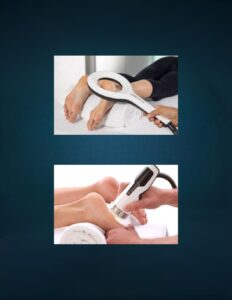
Incorrect Dosing: Too Little or Too Much
Shockwave therapy works through controlled biological stress. The dose must be precise.
Underdosing
If energy levels are too low:
-
Tissue stimulation is insufficient
-
Blood flow response is minimal
-
Collagen remodeling does not occur
-
Patients see little or no improvement
Some clinics lower energy settings to reduce discomfort, but inadequate intensity often leads to weak results.
Overdosing
Excessively high energy or too many pulses can:
-
Irritate already sensitive tissue
-
Increase inflammation unnecessarily
-
Prolong soreness
-
Delay return to activity
The goal is not maximum pain during treatment—it’s optimal biological response.
Correct dosing depends on:
-
Chronicity of injury
-
Tissue depth
-
Patient pain tolerance
-
Stage of healing
-
Overall load exposure
There is no one-size-fits-all protocol.
Using the Wrong Type of Shockwave
Another common reason shockwave fails is confusion between different technologies.
There are generally two types:
-
Radial shockwave (RPW) – More superficial, spreads outward
-
Focused shockwave (ESWT) – Deeper, targeted energy delivery
Chronic deep tendon injuries often require focused energy. Treating deep degeneration with superficial radial shockwave may not provide adequate penetration.
If the wrong modality is used, the tissue may not receive sufficient stimulation.
Ignoring Load Management
Even perfectly delivered shockwave will fail if load management is ignored.
Tendon healing requires:
-
Progressive strength training
-
Controlled return to sport
-
Avoiding overload during early remodeling
If patients resume full activity too quickly or fail to strengthen properly the tissue will not adapt.
Shockwave stimulates healing, but rehab directs it.
Treating Too Early or Too Late
Shockwave is most effective for chronic tendinopathy, not acute inflammation.
If used too early in an injury, when inflammation is high, it may aggravate symptoms.
If used too late, when structural damage is severe or tendon tearing is advanced, it may not be sufficient alone.
Correct timing is critical.
The Importance of Assessment
Before shockwave is delivered, a thorough evaluation should determine:
-
Is the tissue degenerative or inflamed?
-
Is this tendon pain or referred pain?
-
Is joint instability contributing?
-
Is biomechanics driving overload?
Without proper assessment, shockwave becomes guesswork.
Why Results Vary So Much
When shockwave fails, it’s often due to:
-
Poor diagnosis
-
Inadequate energy levels
-
Incorrect treatment depth
-
Too few sessions
-
No rehab integration
-
Lack of operator experience
When done correctly, shockwave can significantly improve chronic tendon pain. When done casually, it becomes an expensive vibration massage.
Final Thoughts
Shockwave therapy is a powerful tool but it is not magic.
Its success depends heavily on:
-
Clinical expertise
-
Proper dosing
-
Correct technology selection
-
Structured rehabilitation
-
Appropriate patient selection
If you’ve tried shockwave before and it “didn’t work,” the issue may not have been the treatment itself it may have been how it was delivered.
In musculoskeletal care, tools matter.
But precision, experience, and integration matter more.